The Rise of Dimensional Surfaces: Why Texture Is Defining Modern Kitchen Design
For years, kitchen design leaned heavily on smooth, uninterrupted finishes. Flat cabinet fronts, polished stone, and sleek tile created a clean, minimal look that felt modern and safe. But lately, something has shifted. Kitchens are becoming more layered, more tactile, and more personal.
Dimensional surfaces are at the center of that change. Instead of relying on color or bold patterns, today’s kitchens are using texture to create depth and interest. Fluted stone, ribbed cabinetry, sculpted tile, and textured backsplashes are turning everyday surfaces into design features.
It’s a subtle shift, but one that completely changes how a space feels—and why textured kitchens are filling Pinterest feeds right now.
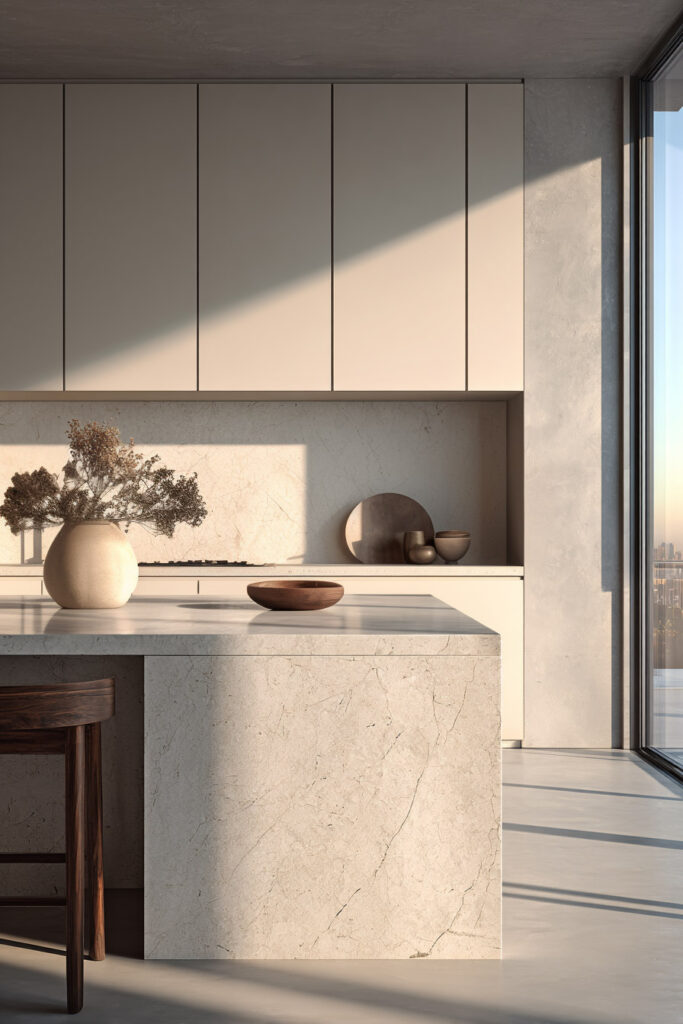
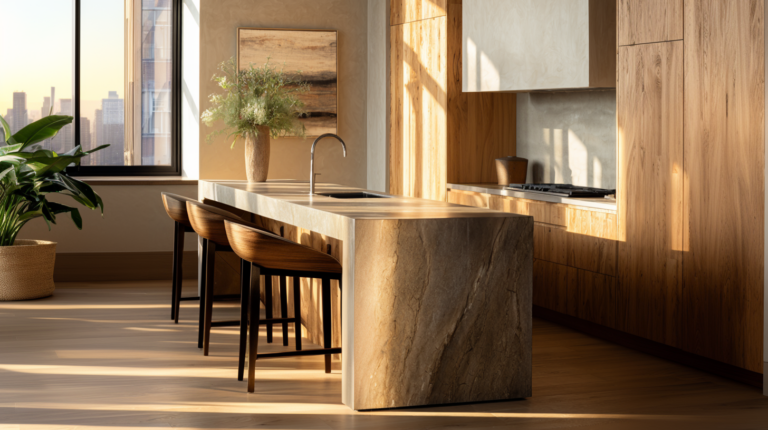
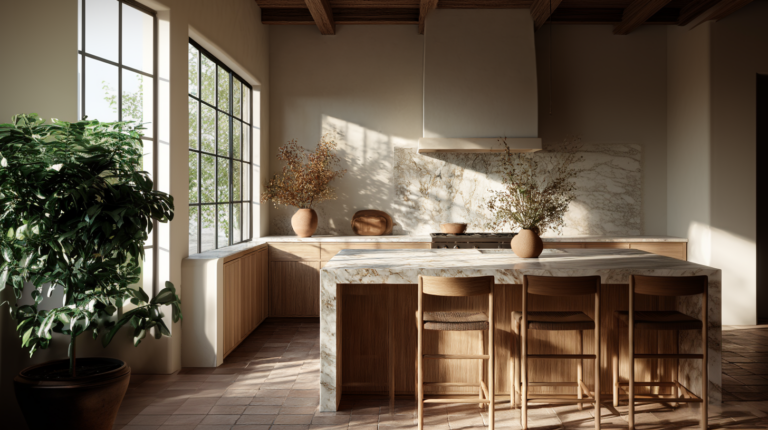
This warm minimalist kitchen highlights how dimensional surfaces can add depth without overwhelming a neutral space. The stone island and softly textured backsplash create subtle variation that shifts beautifully with natural light, giving the kitchen a calm, architectural feel. It’s a perfect example of how textured kitchen trends bring warmth and interest to modern neutral interiors.
Why Texture Feels Fresh in a World of Neutrals
As neutral kitchens became more popular, many spaces started to look similar. Soft whites, warm beiges, and natural wood tones created calm environments, but sometimes lacked contrast or dimension.
Texture brings that balance back. It introduces variation without disrupting a neutral palette, allowing kitchens to feel warm and visually interesting while still staying serene. Light naturally interacts with textured surfaces, creating movement throughout the day.
This is why dimensional surfaces work so well in modern kitchen design—they add character without adding chaos.
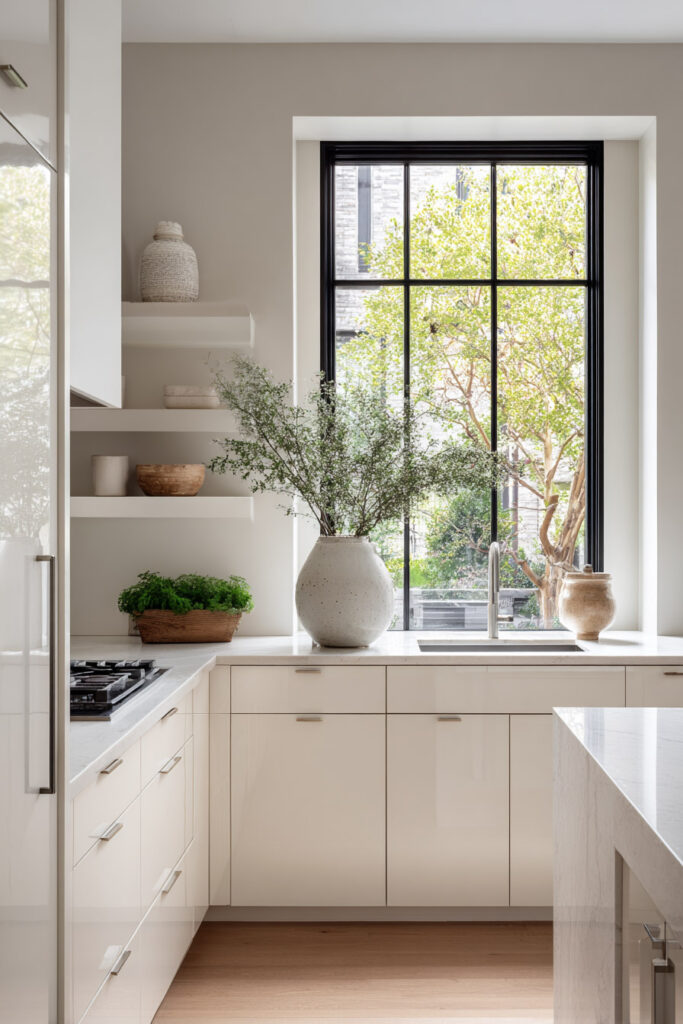
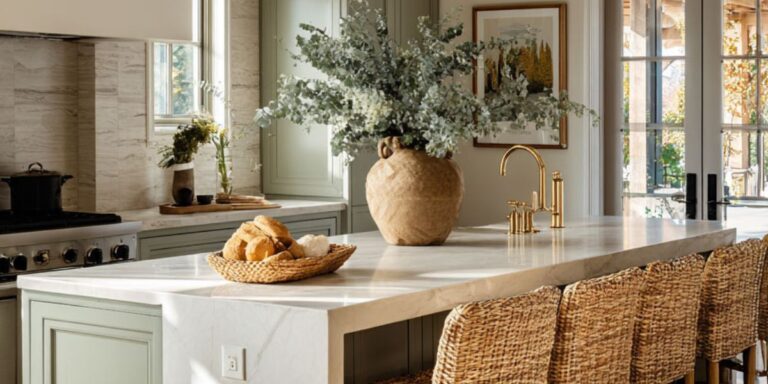
This warm neutral kitchen shows how subtle texture and soft finishes can make a space feel calm but layered at the same time. Smooth cabinetry, natural wood accents, and simple styling let the light and materials do the work, creating depth without visual clutter. It’s a great example of how dimensional surfaces trends kitchen designs are moving toward warmth and quiet detail instead of bold contrast.
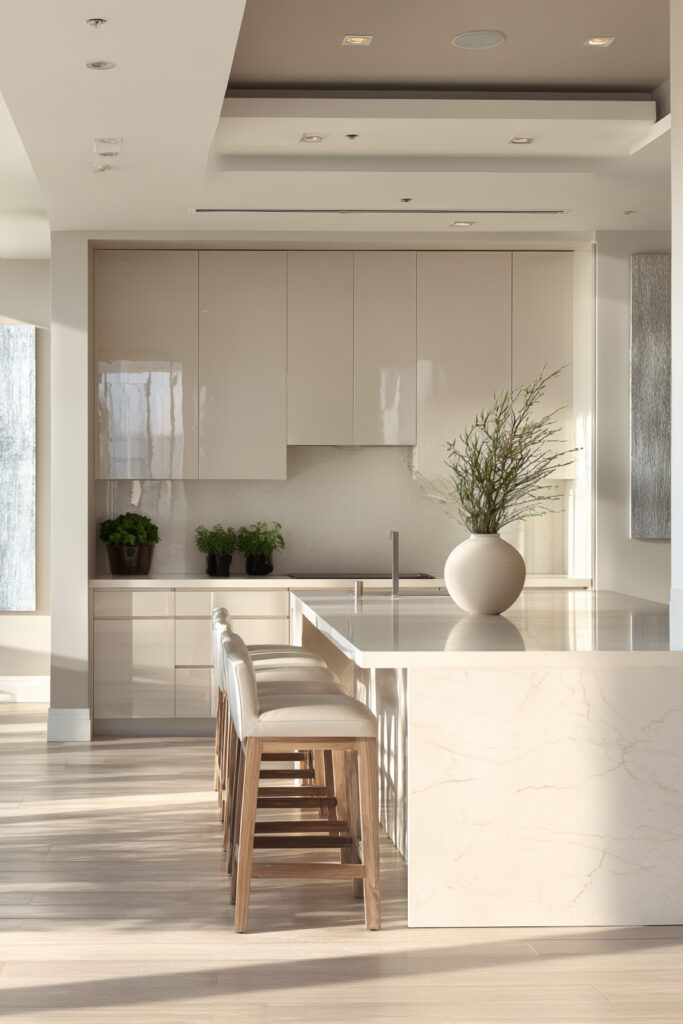
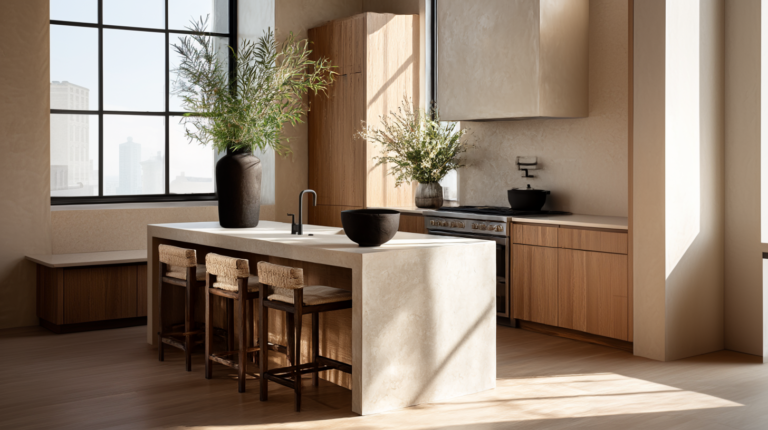
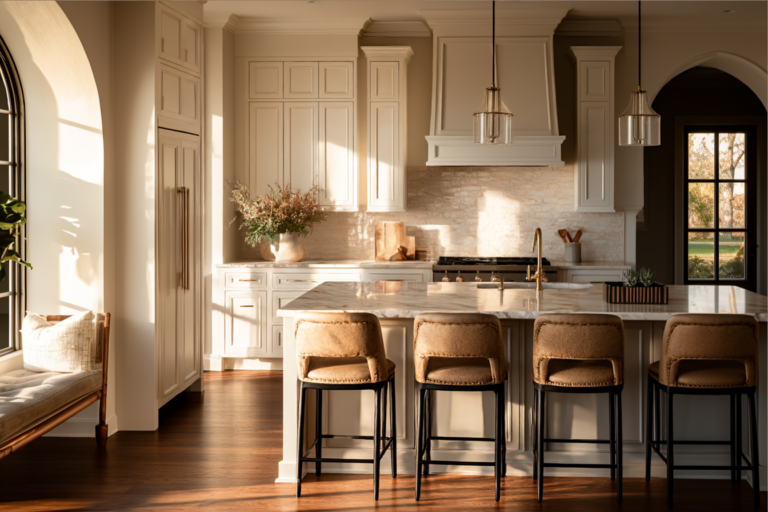
This modern neutral kitchen shows how subtle dimensional surfaces can create depth even with smooth cabinetry and a minimal color palette. The soft stone island, warm tones, and clean lines feel calm and refined while natural light highlights gentle texture throughout the space. It’s a great example of how textured kitchen design adds warmth without relying on bold color or heavy contrast.
Dimensional Backsplashes Are Replacing Statement Tile
In the past, backsplashes often relied on bold color or busy patterns to stand out. Today, the focus has shifted toward material and form instead. A dimensional backsplash creates interest through depth rather than decoration.
Sculpted tile, carved stone, and ribbed finishes add a quiet focal point that feels intentional and timeless. Even in a monochromatic kitchen, a textured backsplash can completely transform the space.
Because the change is subtle, it feels elevated rather than trendy—one of the main reasons this look continues to gain popularity.
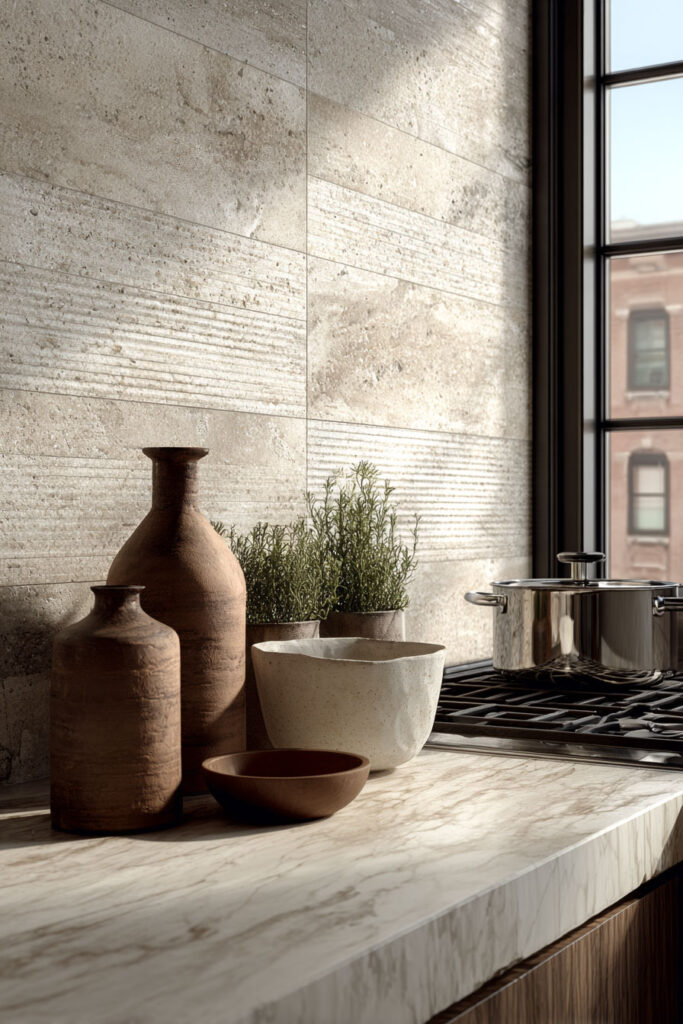
This dimensional backsplash shows how textured stone can become the focal point of a modern kitchen without relying on bold color. The horizontal ribbed detail adds movement and depth, while warm earthy tones and natural materials keep the space feeling relaxed and organic. It’s a perfect example of how textured kitchen trends bring character and warmth to neutral interiors.
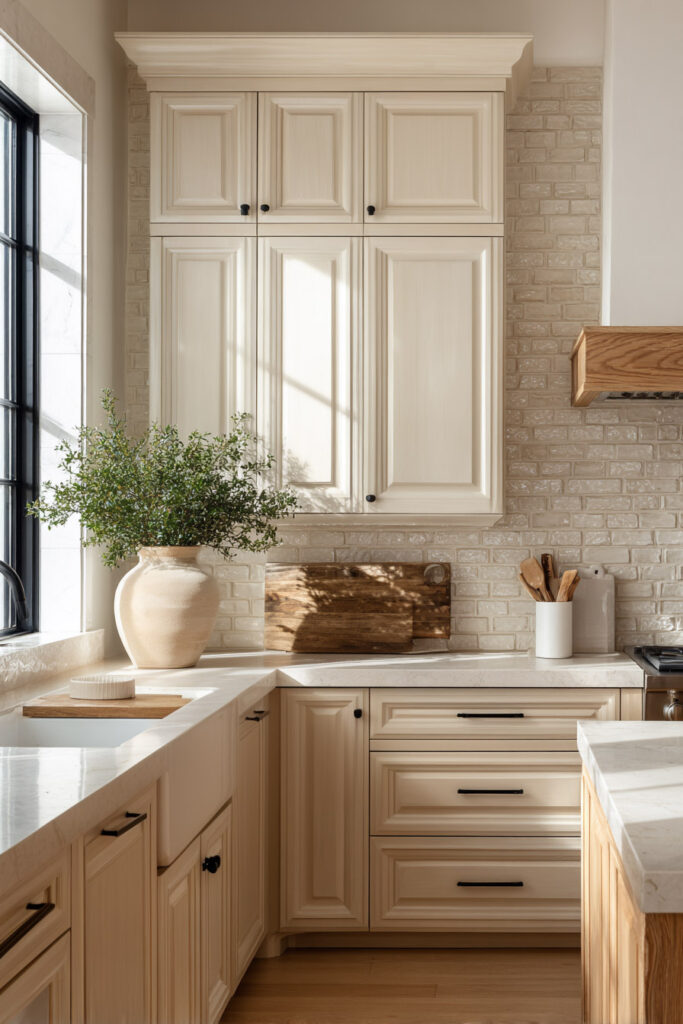
This warm neutral kitchen shows how a dimensional backsplash can quietly add depth while keeping the space soft and timeless. The glossy textured tile reflects light throughout the day, creating movement that makes the kitchen feel layered without overpowering the cabinetry. It’s a beautiful example of how textured kitchen design brings character to classic and modern spaces alike.
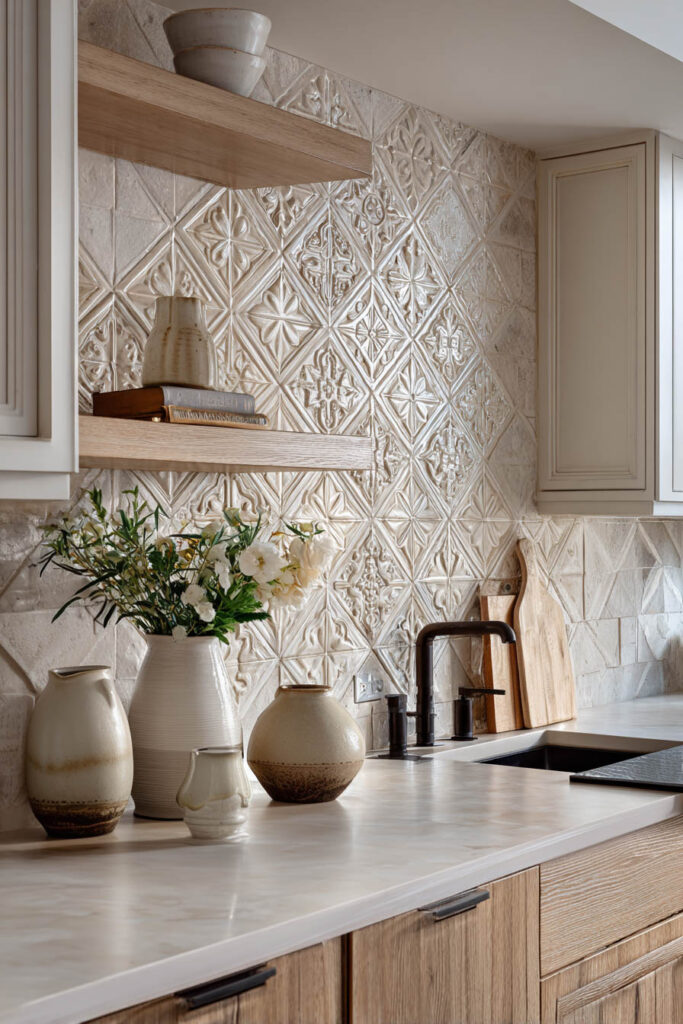
This dimensional backsplash shows how sculpted tile can completely transform a kitchen while keeping the palette soft and neutral. The raised pattern adds depth and movement, catching light in a way that makes the space feel layered and custom without feeling busy. It’s a great example of how textured kitchen trends bring warmth and personality to modern neutral interiors.
Fluted Details Add Movement Without Visual Noise
Fluted and ribbed surfaces have become one of the most recognizable elements of the dimensional surfaces trend. The vertical lines introduce rhythm and structure while keeping the overall look soft.
Unlike high-contrast design features, fluting creates movement in a way that feels calm and architectural. It works especially well in kitchens with warm neutrals, natural wood cabinetry, or stone countertops, where texture becomes the main source of visual interest.
It’s a detail that looks custom but still feels approachable, which makes it especially appealing for Pinterest-inspired spaces.
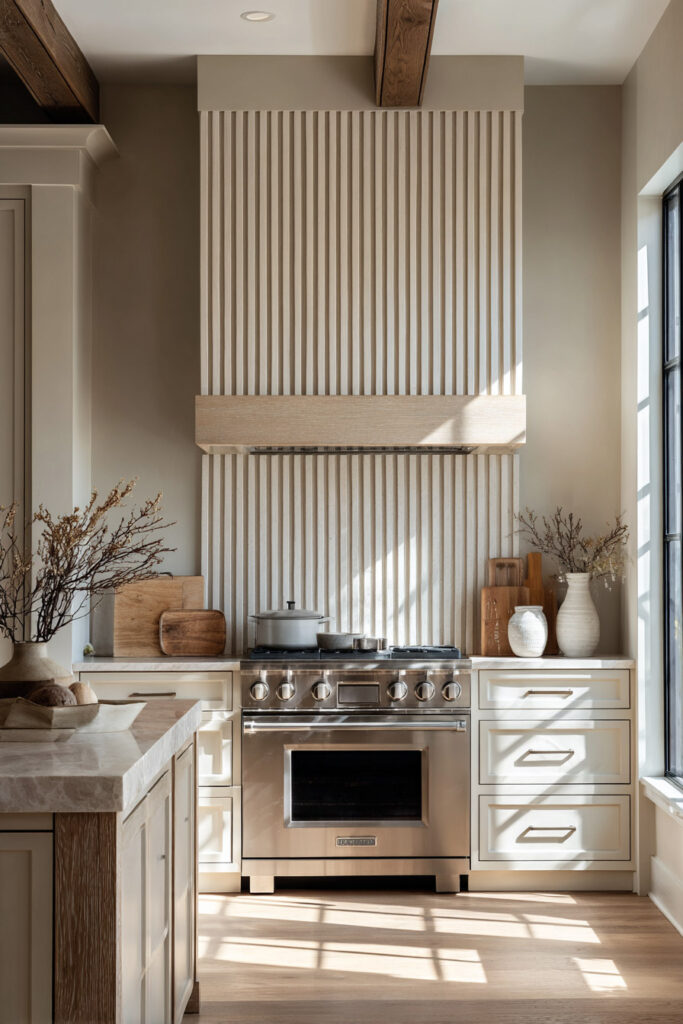
This fluted kitchen feature shows how vertical texture can instantly make a space feel more architectural and refined while still keeping a warm, neutral palette. The ribbed surface behind the range adds movement and depth, allowing light and shadow to create natural variation throughout the day. It’s a perfect example of how dimensional surfaces trends kitchen designs are using texture instead of bold color to create impact.
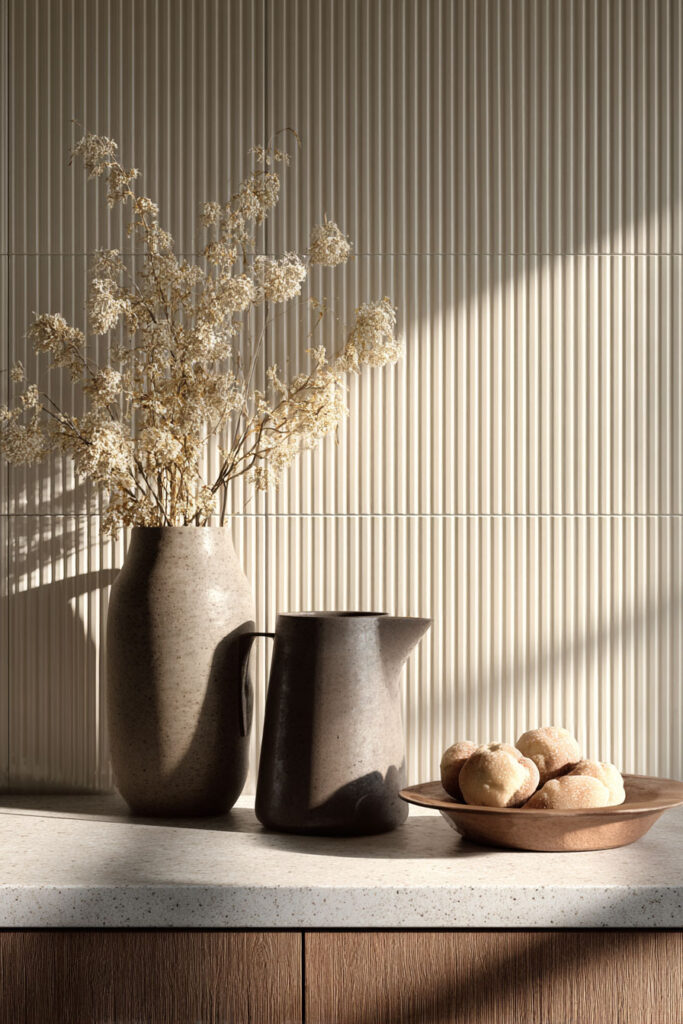
This close-up shows how fluted tile adds quiet texture while keeping a kitchen feeling soft and minimal. The vertical ribbing creates gentle shadow and movement as light shifts across the surface, adding depth without needing bold color or pattern. It’s a great example of how dimensional surfaces trends kitchen designs bring warmth and interest through texture alone.
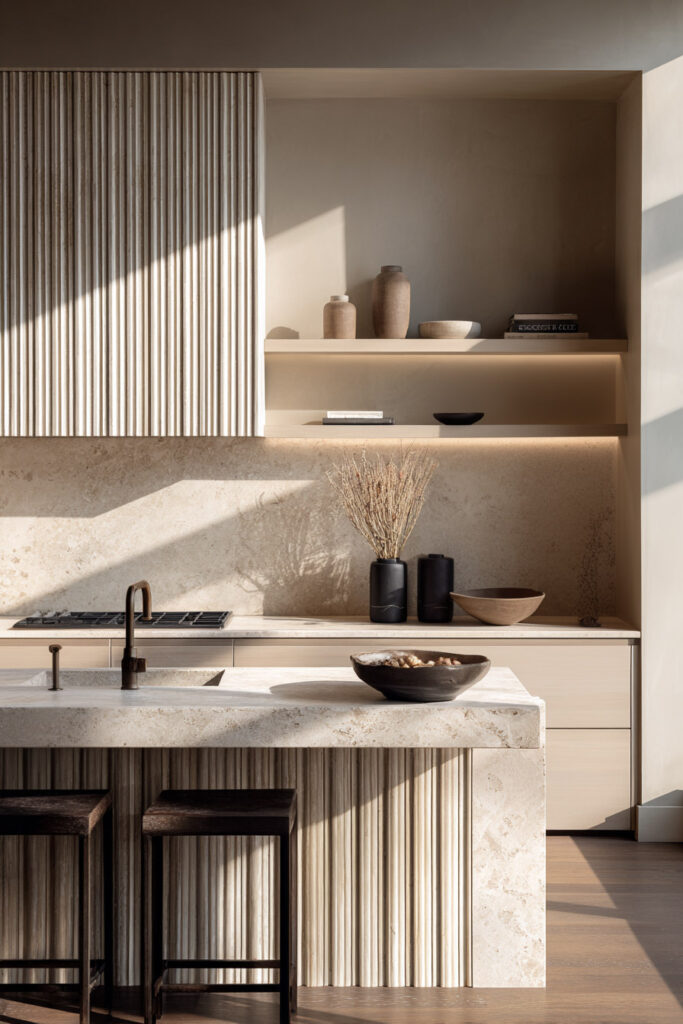
This modern kitchen shows how fluted surfaces can add depth while keeping the overall design calm and minimal. The ribbed island detail and textured backsplash create soft shadow and movement, giving the space a layered, architectural feel without adding visual clutter. It’s a strong example of how dimensional surfaces trends kitchen designs use texture to create warmth in neutral interiors.
Designing with Texture Instead of Adding More Decor
One of the biggest shifts in modern kitchen design is the idea that surfaces themselves can replace excess styling. Instead of filling counters with décor, designers are focusing on materials that already have presence.
Ribbed cabinetry, textured tile, and sculptural stone allow kitchens to feel complete without needing extra layers. The result is cleaner, more intentional spaces where every element serves a purpose.
This approach also helps kitchens feel calmer—something many homeowners are prioritizing right now.
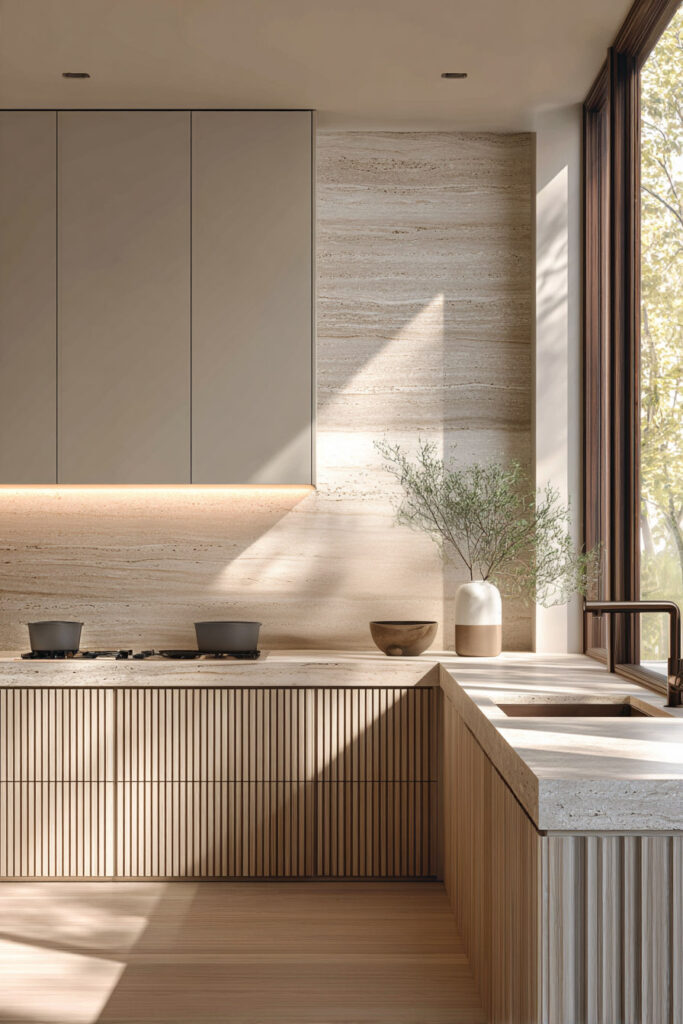
This kitchen beautifully shows how ribbed cabinetry and a textured stone backsplash work together to create depth without adding visual noise. The layered dimensional surfaces bring warmth and movement to the neutral palette, while natural light highlights the subtle texture throughout the space. It’s a great example of how modern textured kitchen design feels calm, architectural, and effortlessly elevated.
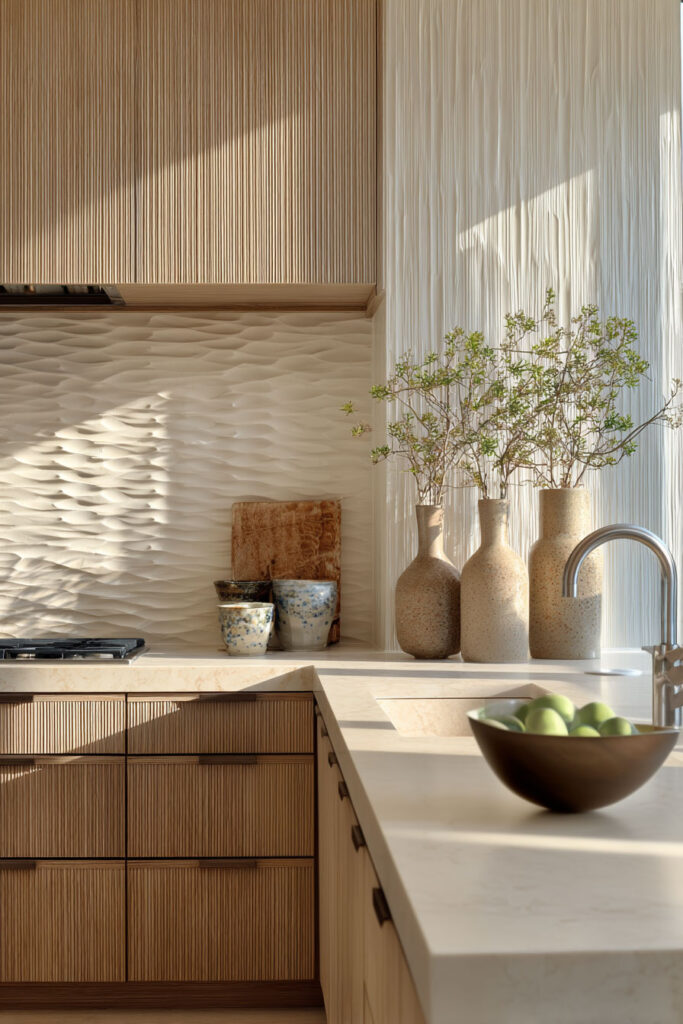
This kitchen combines ribbed cabinetry with a sculpted backsplash to create a layered look that feels warm and modern at the same time. The mix of vertical texture and softly dimensional tile adds depth while keeping the palette calm and cohesive. It’s a great example of how dimensional surfaces trends kitchen designs use texture to create interest without relying on bold color.
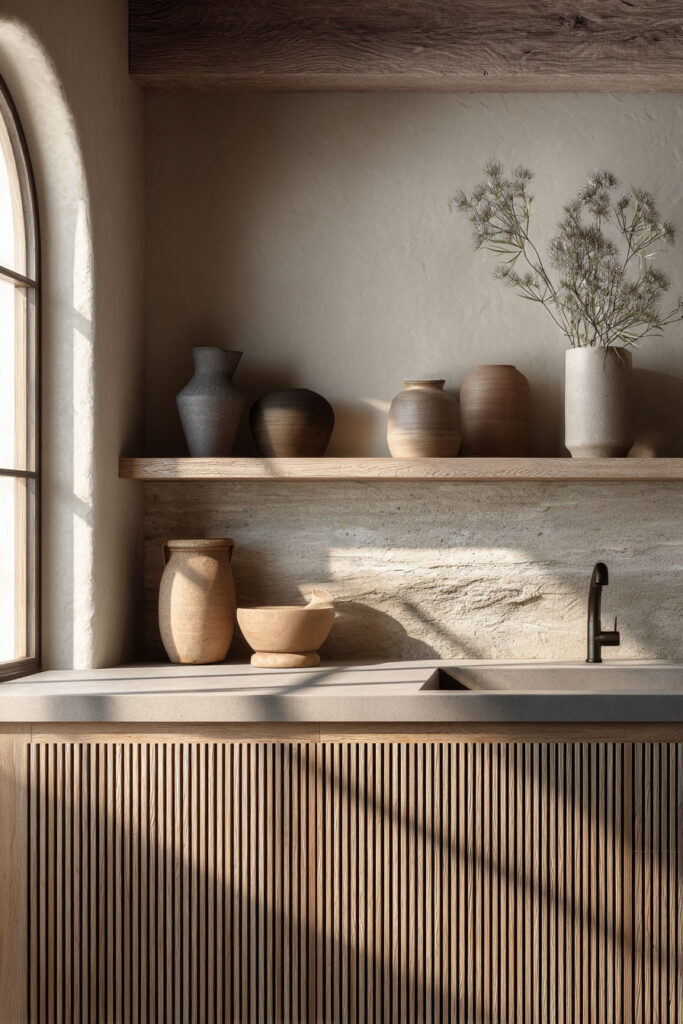
This warm, organic kitchen shows how ribbed cabinetry and natural textured surfaces can make a space feel layered without adding visual clutter. The vertical wood detailing adds rhythm and depth, while the stone backsplash and soft plaster wall keep the overall look calm and grounded. It’s a beautiful example of how dimensional surfaces trends kitchen designs create warmth through texture instead of color.
Soft Texture Keeps Minimal Kitchens From Feeling Cold
Minimalist and Scandinavian-inspired kitchens often rely on simplicity, but without texture they can sometimes feel flat. Subtle dimensional surfaces solve this by adding warmth without breaking the clean aesthetic.
Lightly textured plaster finishes, softly fluted stone, and handmade ceramic tiles introduce variation that feels natural rather than decorative. These details are easy to live with and age gracefully over time.
It’s one of the reasons textured interior design has become so closely tied to cozy minimalism.
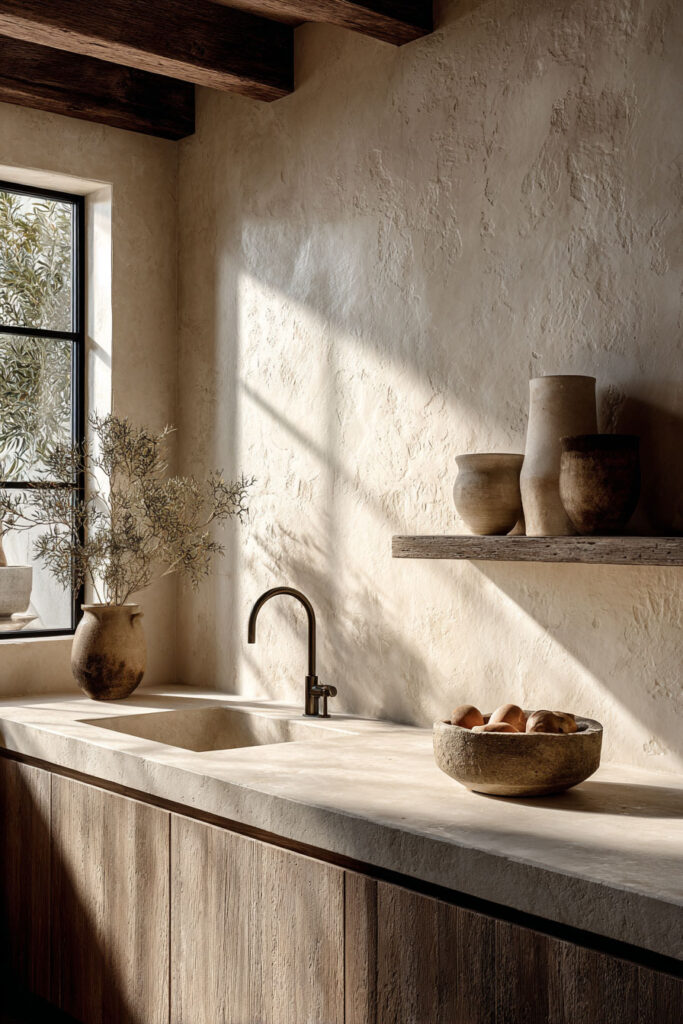
This neutral kitchen shows how subtle texture can completely change the feel of a space without adding bold color or pattern. The softly textured plaster wall and natural stone surfaces create warmth and depth, while simple styling keeps the look calm and timeless. It’s a perfect example of how dimensional surfaces trends kitchen designs make neutral spaces feel layered and inviting.
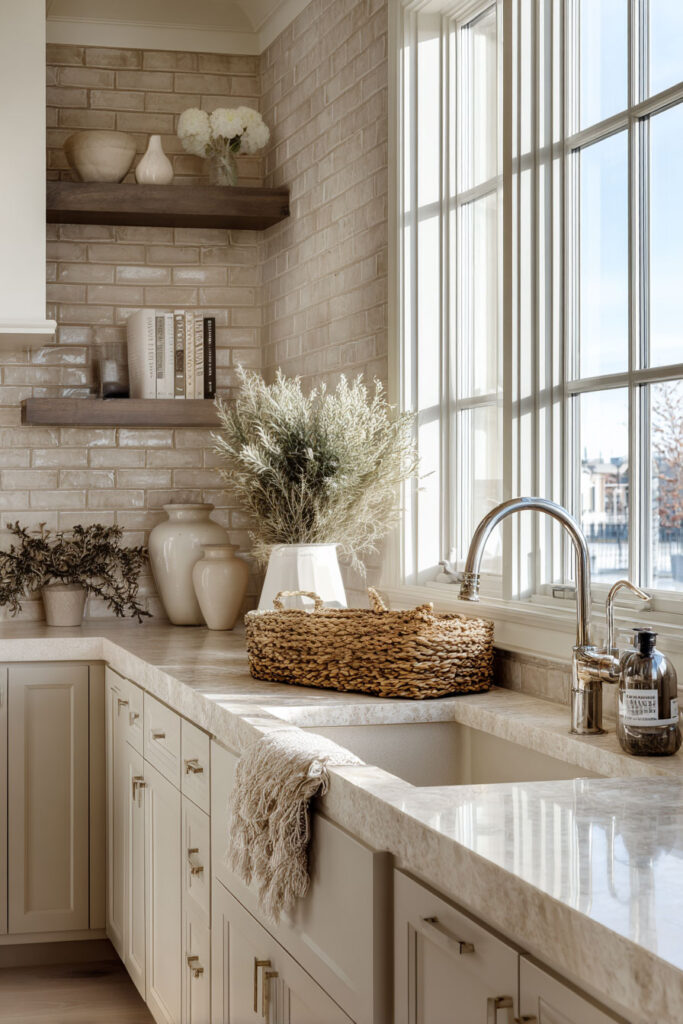
This warm neutral kitchen shows how subtle texture can make classic spaces feel fresh and layered. The softly glazed tile backsplash reflects natural light while adding gentle depth that keeps the space from feeling flat. It’s a beautiful example of how dimensional surfaces trends kitchen designs bring warmth and character to neutral interiors without overpowering the design.
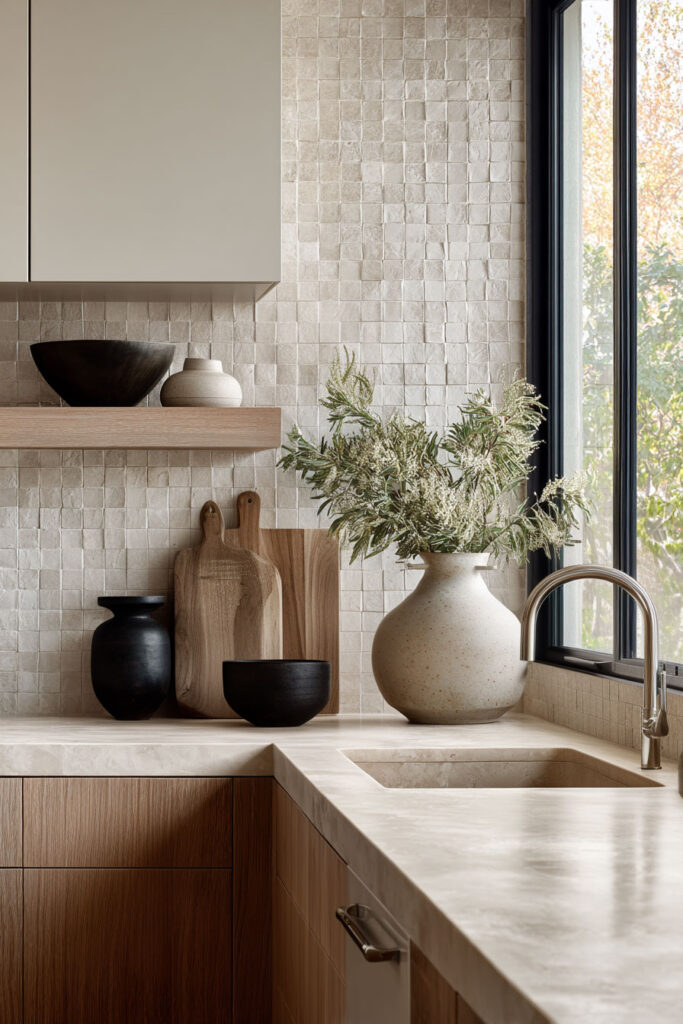
his neutral kitchen shows how small-scale texture can add depth while keeping the overall design soft and timeless. The dimensional tile backsplash creates gentle variation that catches natural light, making the space feel layered without overwhelming the warm neutral palette. It’s a great example of how subtle dimensional surfaces trends kitchen designs keep minimalist spaces feeling warm and inviting.
Natural Texture vs. Architectural Texture: Two Ways to Use the Trend
Not all texture creates the same mood. Natural textures, like clay tile or raw stone, feel organic and relaxed. They bring softness and an imperfect quality that makes kitchens feel welcoming.
Architectural textures, such as precise ribbing or sharply defined fluting, feel more structured and modern. They create stronger lines and a slightly more polished atmosphere.
Both approaches work beautifully—it simply depends on whether you want your kitchen to lean warm and earthy or clean and contemporary.
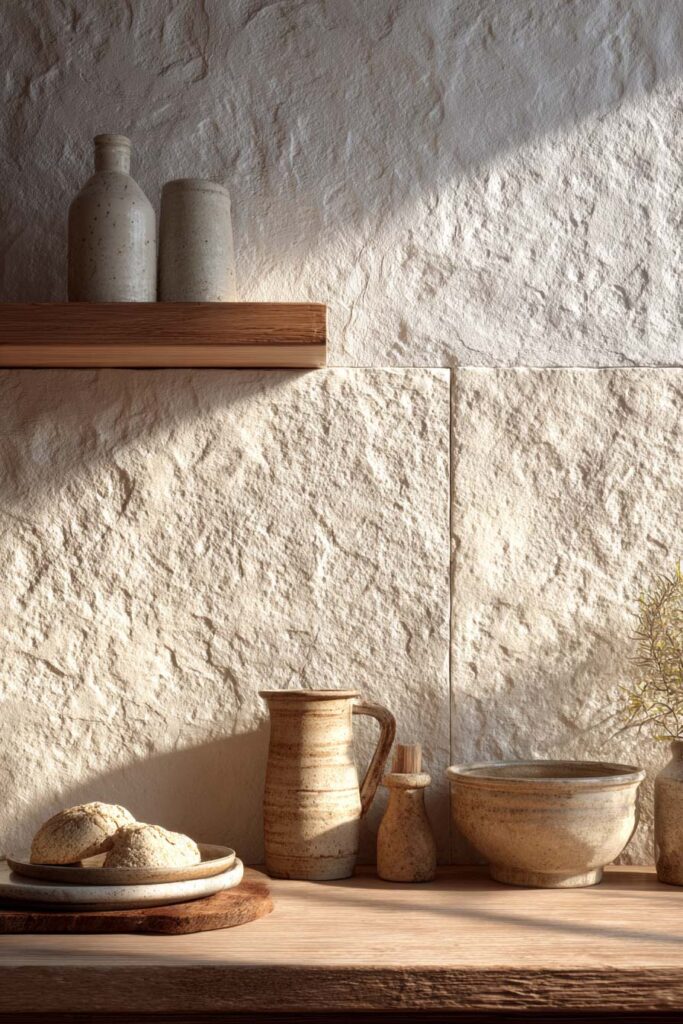
This kitchen detail highlights the beauty of organic texture through natural stone and plaster-like surfaces. The irregular finish adds depth and warmth, allowing light to create soft shadows that make the space feel relaxed and lived-in. It’s a perfect example of how dimensional surfaces trends kitchen designs use natural texture to bring character to neutral interiors.
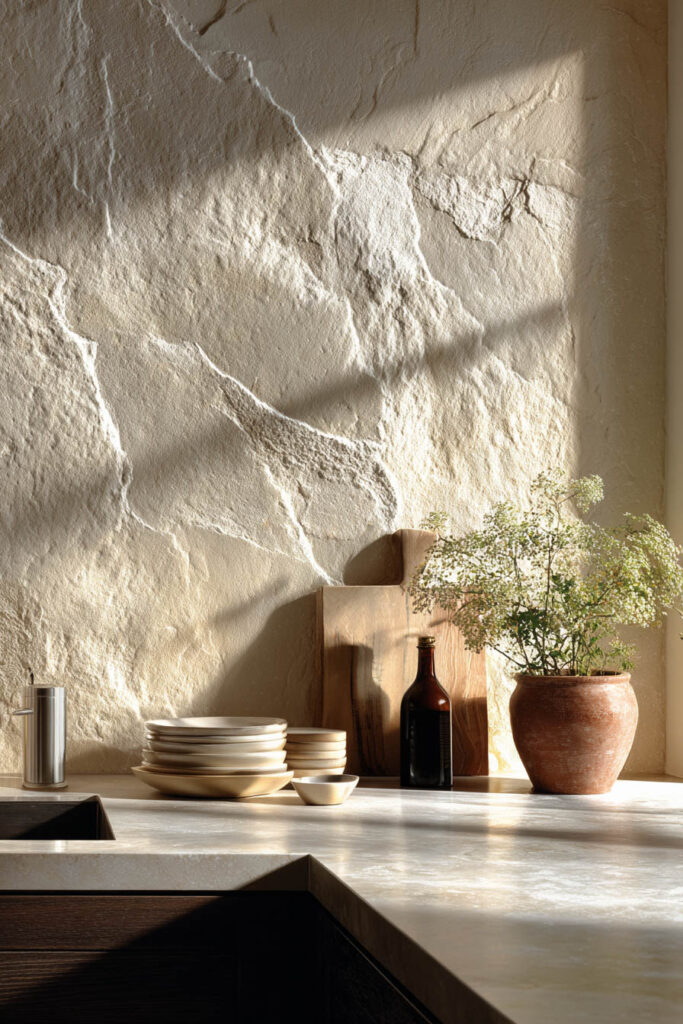
This kitchen showcases the growing shift toward organic, sculptural surfaces, where textured plaster walls become a design feature instead of a background element. The uneven finish catches natural light beautifully, adding warmth and depth to an otherwise neutral palette. It’s a strong example of dimensional surfaces trends kitchen designs embracing natural imperfections for a softer, more lived-in look.
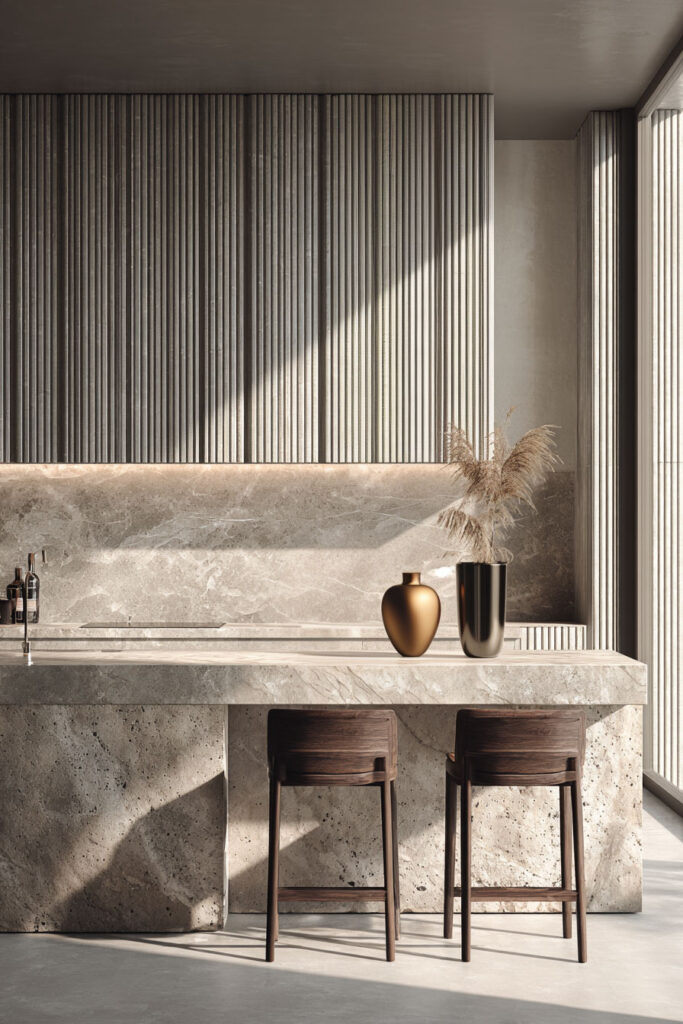
This kitchen highlights the contrast between organic stone surfaces and graphic ribbed cabinetry, creating a balanced and modern layered look. The strong vertical texture adds structure, while the natural stone island keeps the space feeling warm and grounded. It’s a great example of how dimensional surfaces trends kitchen designs combine architectural detail with natural materials for a refined but livable feel.
Materials That Are Leading the Dimensional Surface Trend
Certain materials naturally highlight dimension better than others. Sculpted stone, handcrafted ceramic tile, limewash-style finishes, and textured plaster are all becoming popular choices for backsplashes and accent surfaces.
What makes them stand out is how they respond to light. Raised surfaces create subtle shadows and highlights that shift throughout the day, giving kitchens a sense of movement without needing bold design elements.
This is why dimensional surfaces often feel timeless rather than seasonal.
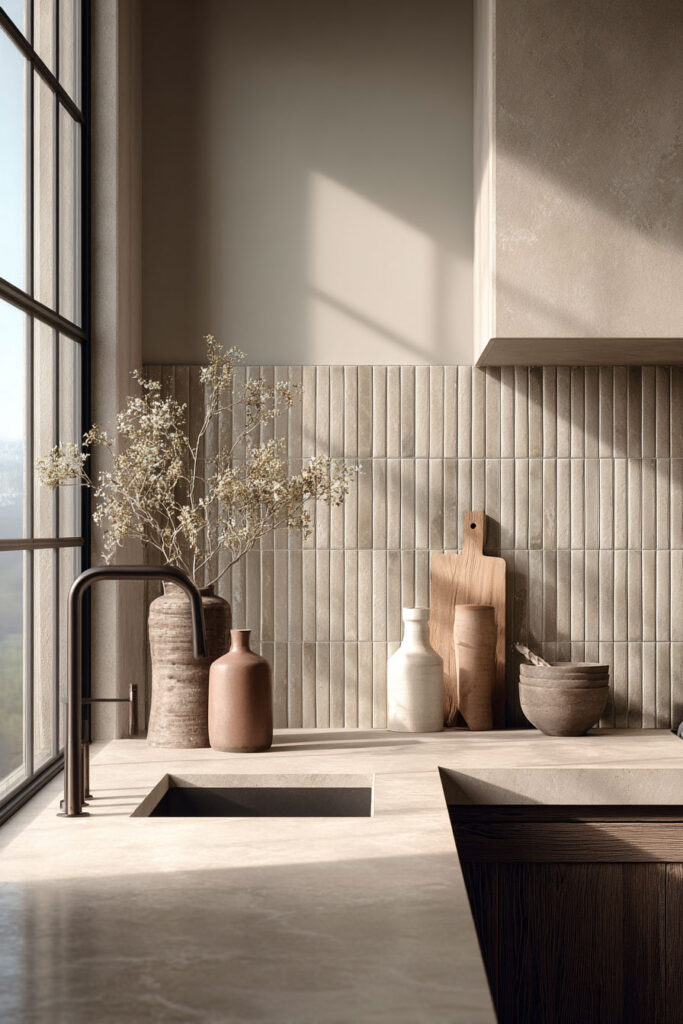
This kitchen highlights how slim vertical tiles can instantly add depth without overwhelming a neutral space. The soft tonal variation and ribbed surface catch natural light throughout the day, creating subtle movement across the backsplash. It’s a perfect example of dimensional surfaces trends kitchen designs that feel calm, modern, and layered while staying warm and minimal.
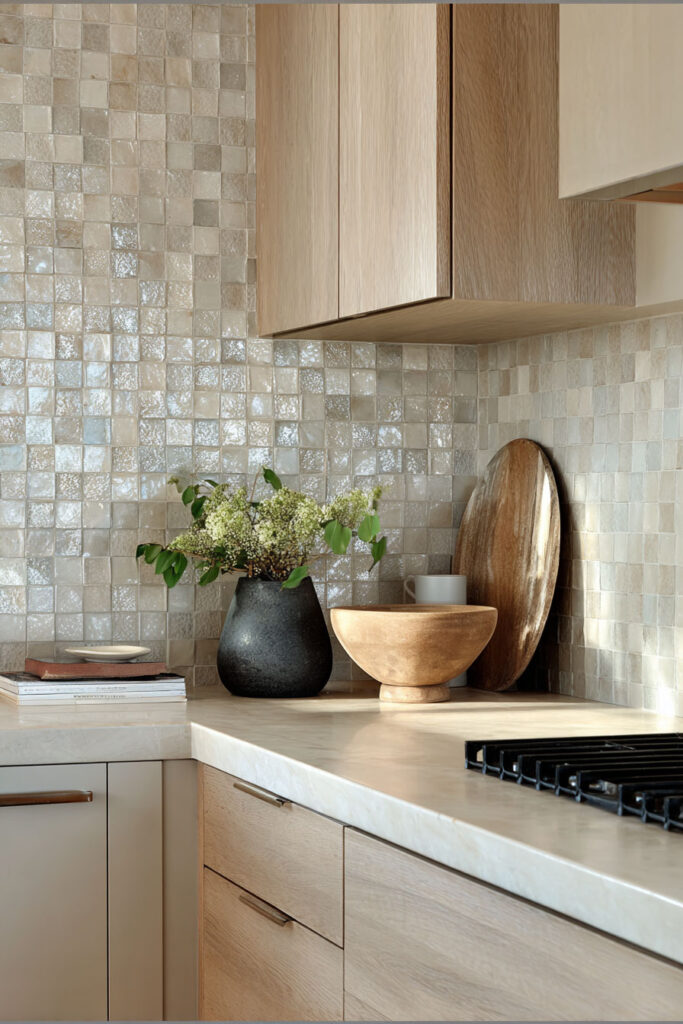
Small-scale mosaic tile brings quiet texture and shimmer to this warm neutral kitchen without overpowering the space. The subtle variation in tone reflects natural light beautifully, adding depth while keeping the overall look soft and timeless. It’s a great example of dimensional surfaces trends kitchen designs that rely on material detail instead of bold color.
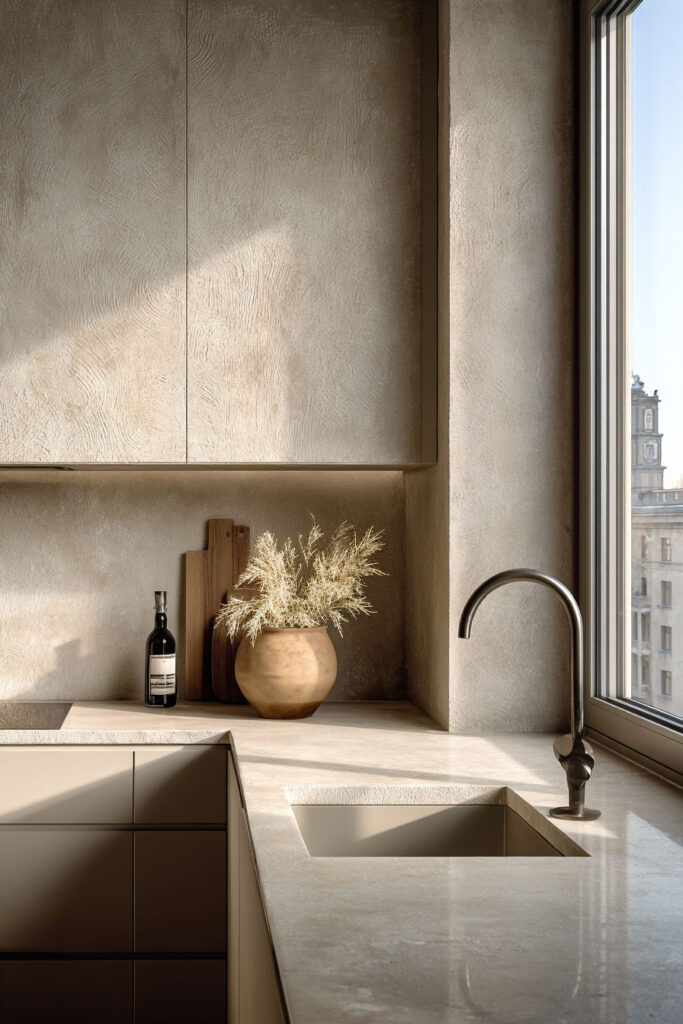
Soft plaster-style walls and subtle tonal variation create depth in this warm neutral kitchen without relying on bold patterns. The textured surface catches natural light throughout the day, adding movement and warmth while keeping the space calm and minimal. This look highlights how dimensional surfaces trends kitchen designs can feel elevated through material texture alone.
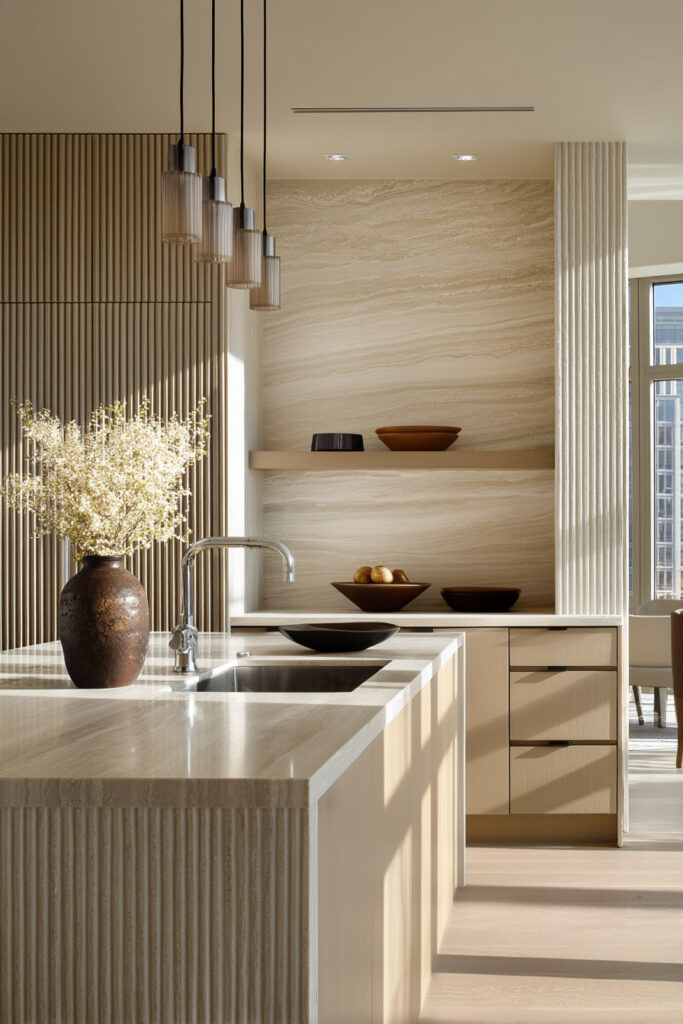
This warm neutral kitchen layers fluted cabinetry, stone surfaces, and vertical textured panels to create depth without adding visual clutter. Natural light highlights the subtle shadows across the ribbed finishes, showing how dimensional surfaces trends kitchen designs bring movement and softness to modern spaces. The mix of stone and linear texture keeps the look calm while still feeling design-forward.
Why Texture Instantly Makes a Kitchen Feel Custom
Texture has always been associated with craftsmanship. When surfaces have depth and variation, they signal attention to detail in a way flat finishes rarely do.
Even small touches—like a fluted island panel or a ribbed backsplash behind the range—can make a kitchen feel more considered and high-end. When paired with natural materials and simple styling, the result feels effortless rather than overdesigned.
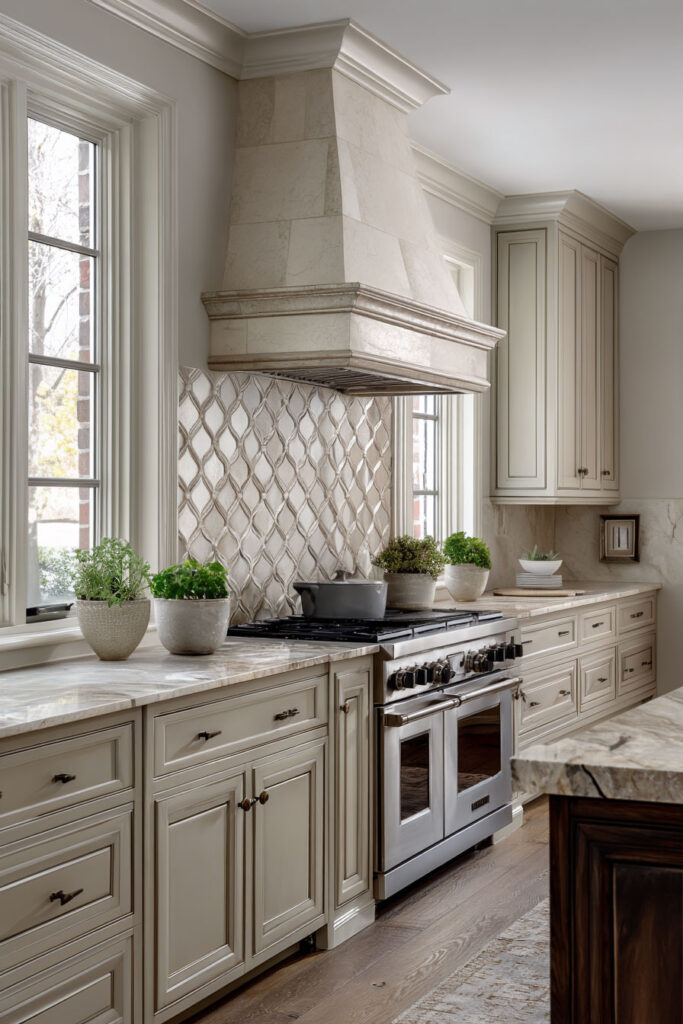
A dimensional tile backsplash adds instant depth to this classic neutral kitchen, creating a high-end look without relying on bold color. The sculpted pattern catches natural light throughout the day, giving the space movement while complementing traditional cabinetry and stone surfaces. This is a great example of how dimensional surfaces trends kitchen designs elevate timeless layouts with texture.
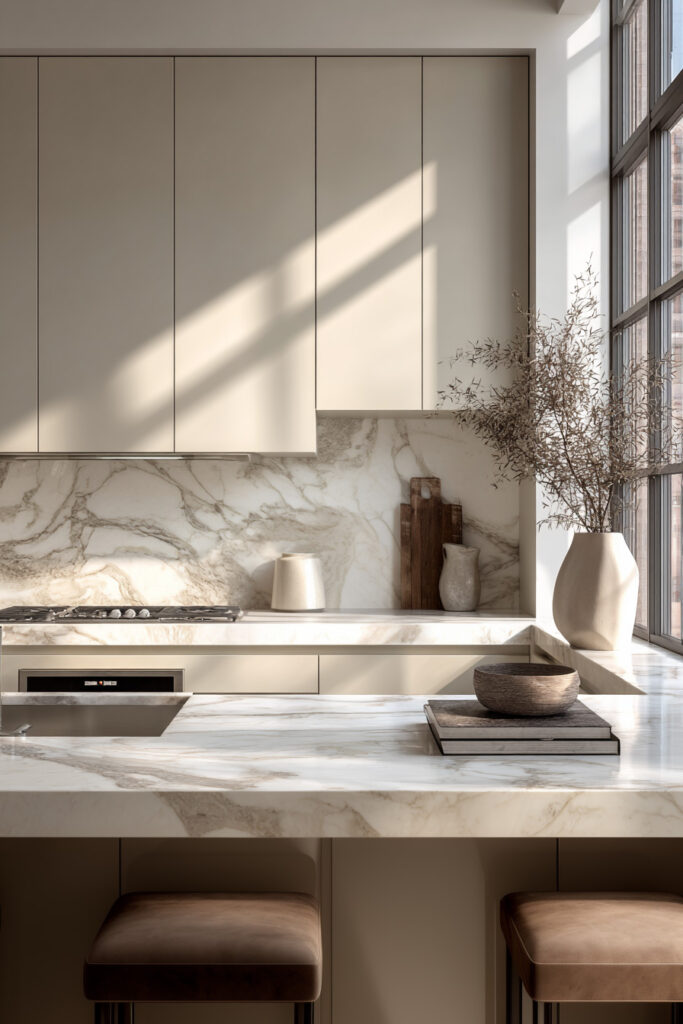
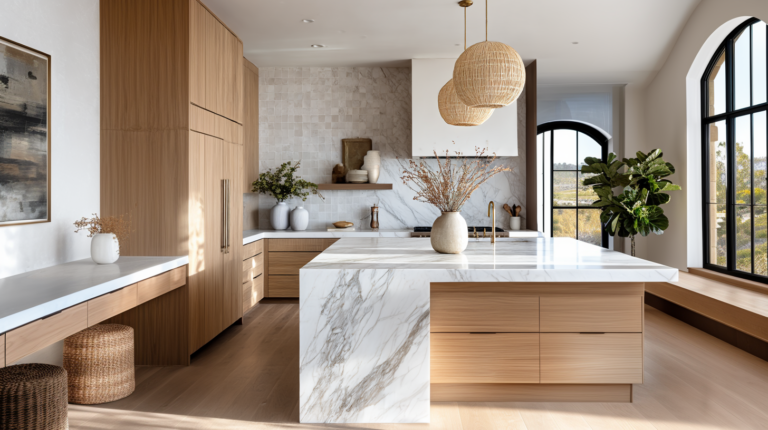
A full-height marble backsplash and waterfall island bring subtle movement and depth to this neutral kitchen, proving that dimensional surfaces don’t always need bold patterns to make an impact. The natural veining adds softness and visual interest while keeping the overall look calm and minimal. This style works especially well for dimensional surfaces trends kitchen designs that lean toward modern, high-end simplicity.
How to Try Dimensional Surfaces Without a Full Renovation
If you’re drawn to the trend but want to keep things simple, start small. A textured backsplash, a fluted panel, or even dimensional tile in a coffee nook can introduce depth without overwhelming the space.
Keeping colors soft and cohesive allows texture to become the focal point. This makes dimensional surfaces a flexible update that works for both small refreshes and full kitchen remodels.
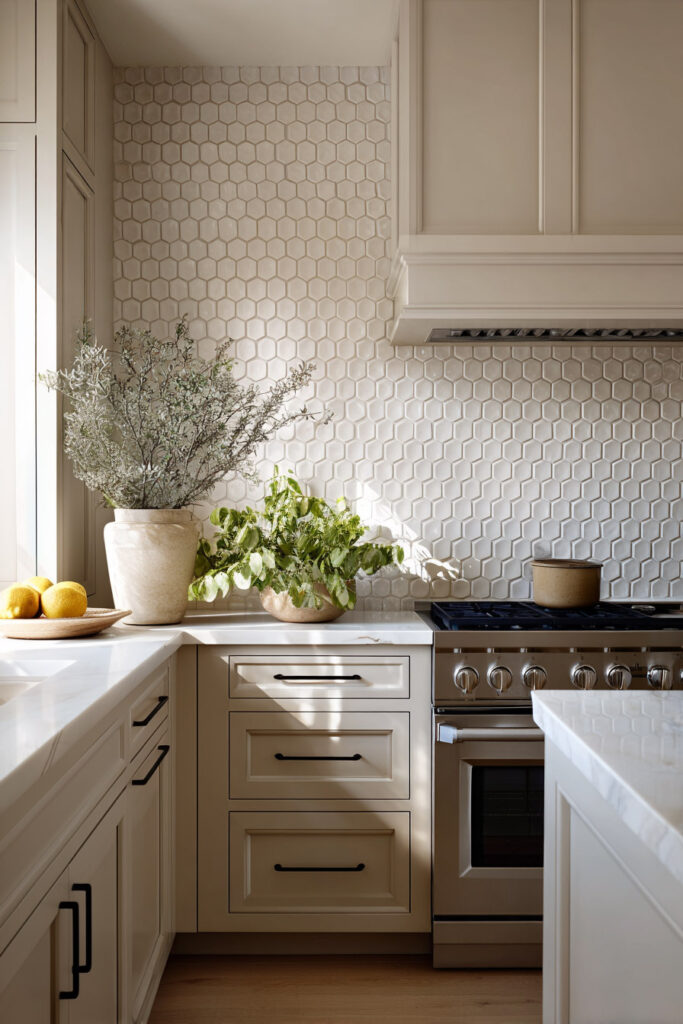
A soft hexagon tile backsplash adds quiet dimension to this neutral kitchen without overwhelming the space. The subtle shape catches natural light and creates gentle shadow variation, making the kitchen feel layered while still calm and timeless. It’s a great example of how dimensional surfaces trends kitchen designs can add interest through pattern rather than bold color.
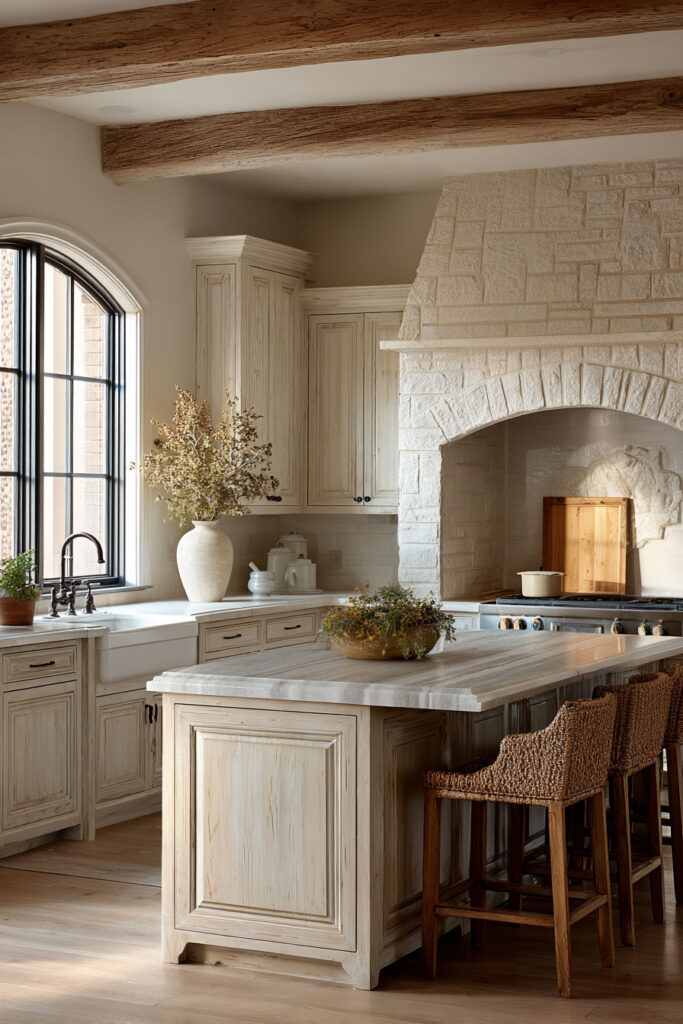
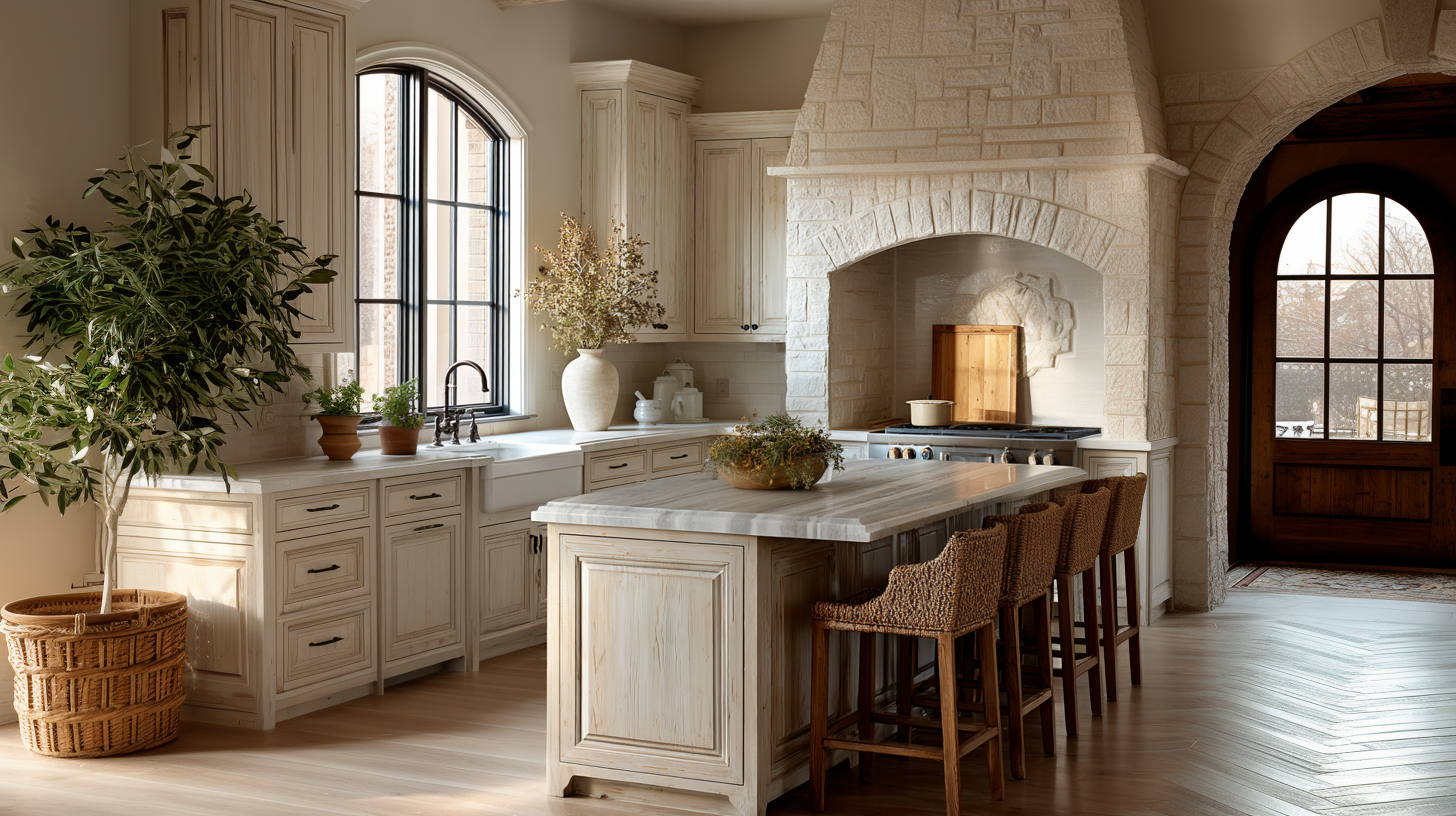
This warm neutral kitchen layers texture through natural materials instead of bold contrast, creating depth while keeping the space calm and inviting. The stone range hood, wood beams, and lightly textured cabinetry work together to add dimension without feeling busy, making it a perfect example of how dimensional surfaces trends kitchen designs can feel timeless and elevated.
Why Texture Is Shaping the Future of Kitchen Design
As kitchen trends move away from bold contrasts and toward softer, more livable spaces, texture is becoming the new way to create interest. Dimensional surfaces bring warmth, movement, and personality while still feeling calm and timeless.
From fluted stone to sculpted tile and ribbed cabinetry, this trend shows that great design isn’t always about adding more—it’s about adding depth. And in today’s kitchens, texture is doing exactly that.
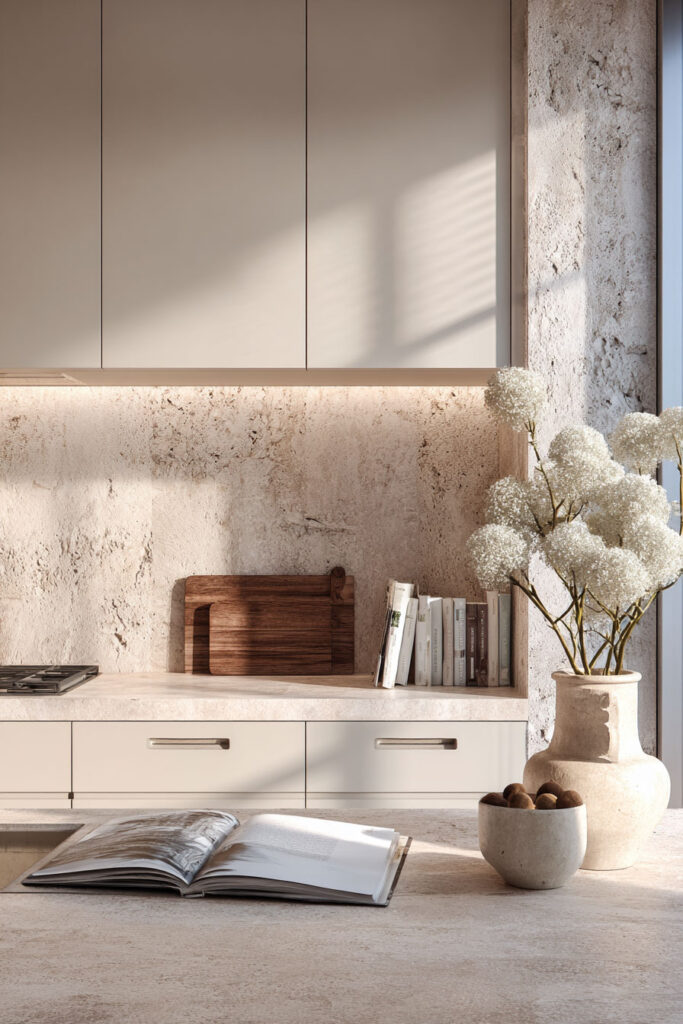
This warm neutral kitchen shows how texture can take the place of bold color, using a softly textured stone backsplash to create depth while keeping the palette calm and cohesive. The layered materials, natural light, and minimal styling make the space feel elevated and modern while still warm and livable — a perfect example of dimensional surfaces trends kitchen designs leaning toward subtle, tactile finishes.
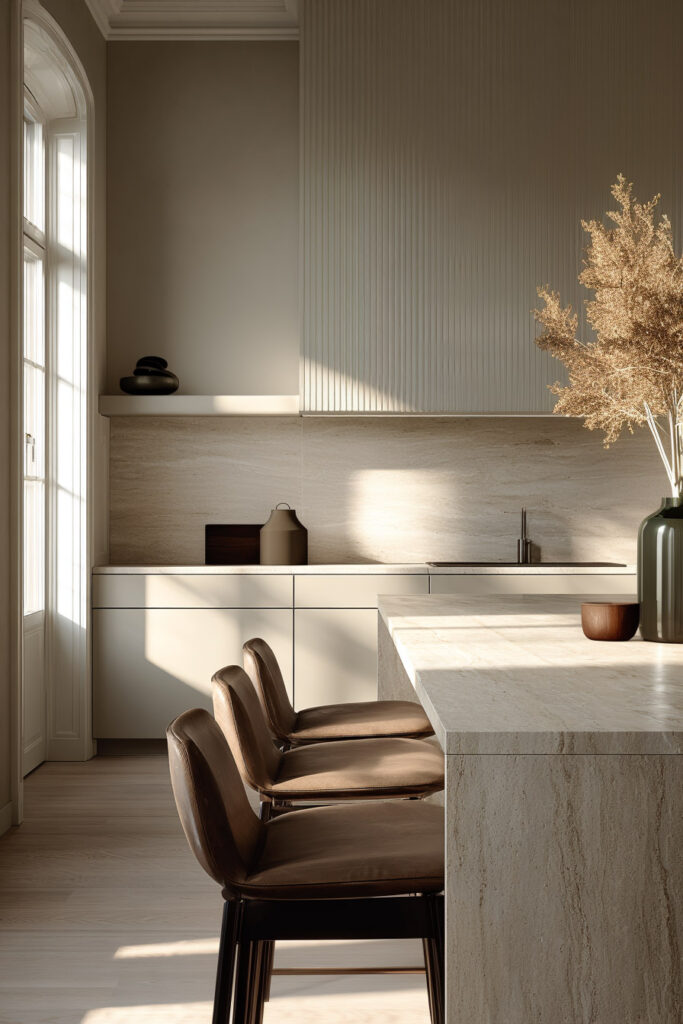
This warm neutral kitchen shows how dimensional surfaces can replace bold color, using fluted cabinetry and softly veined stone to add depth without overwhelming the space. The layered textures, natural light, and tonal palette create a calm, elevated look that feels modern, timeless, and quietly luxurious — a perfect example of texture-led kitchen design.
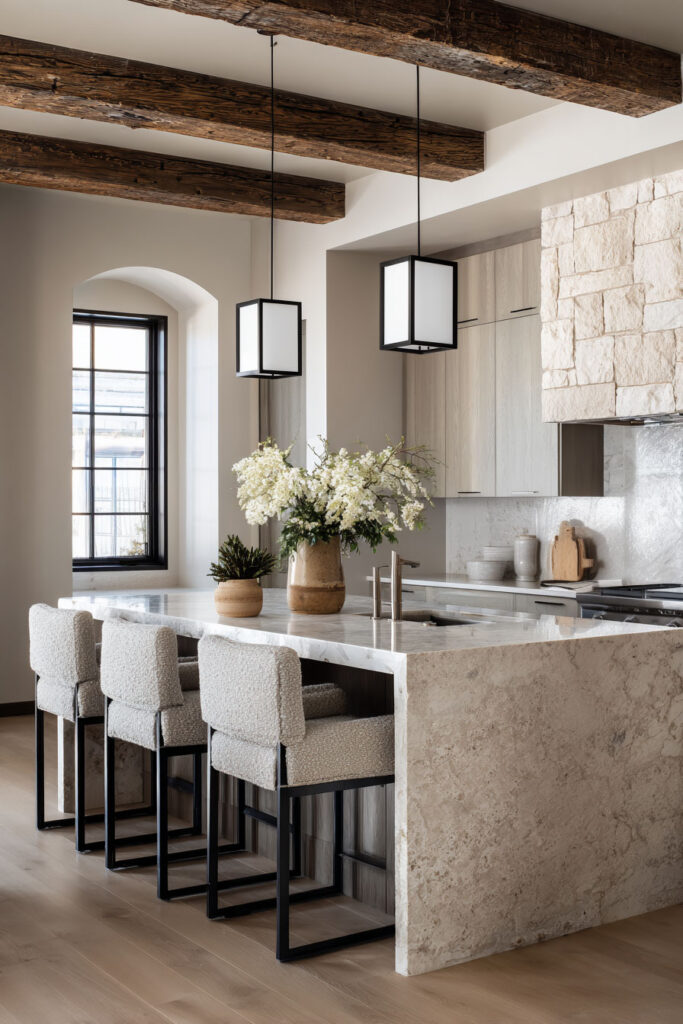
This kitchen shows how layered texture can make a neutral space feel rich and inviting without relying on bold color. Stone surfaces, exposed wood beams, and soft upholstered seating create contrast and depth while keeping the palette calm and cohesive. It’s a great example of how dimensional surfaces bring warmth and character to modern kitchen design.