Dimensional Surfaces Are the Kitchen Trend You Need to Try
For years, smooth finishes were the default. Flat cabinetry, polished stone, and glossy tile felt clean, modern, and easy to live with. But lately, interiors have been moving in a different direction—one that feels warmer, more layered, and far more personal.
Dimensional surfaces are becoming one of the defining features of modern interior design. Sculpted backsplashes, fluted stone, ribbed cabinetry, and textured tile bring depth into a space without relying on bold color or heavy décor. The result feels calm but interesting, minimal but never flat.
If your Pinterest feed has been filled with textured kitchens and softly sculpted surfaces lately, you’re definitely not imagining it. Texture is quietly becoming the new way designers add character while keeping spaces timeless.
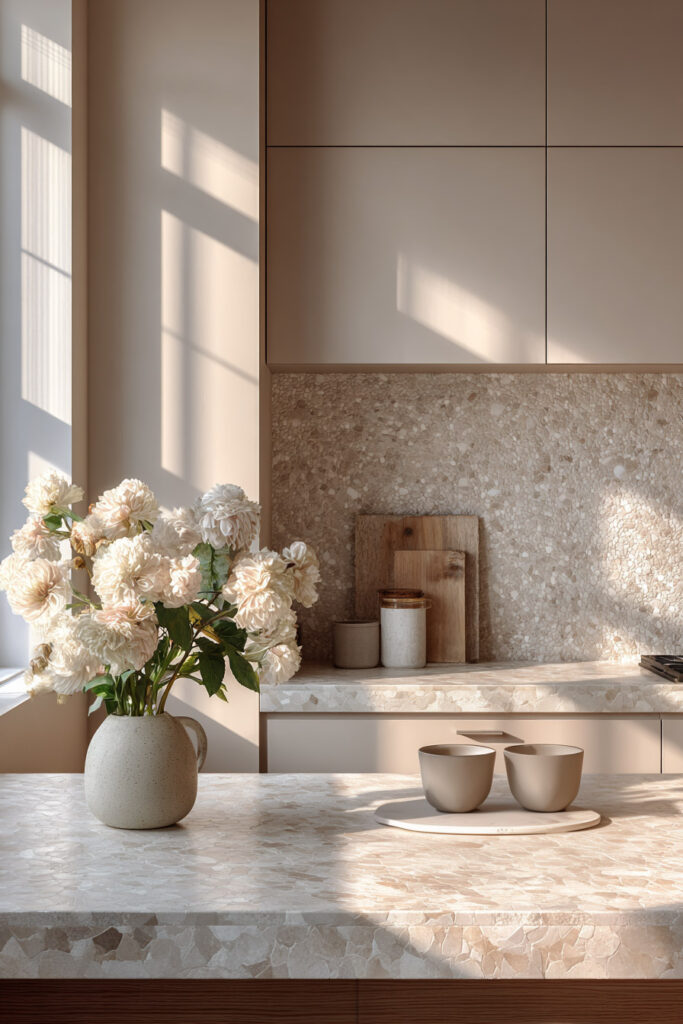
This kitchen shows how terrazzo and composite stone surfaces can introduce dimension in a soft, understated way. The subtle variation in the backsplash and countertop adds texture and visual movement while keeping the palette warm and neutral. It’s a great example of how dimensional surfaces bring personality into modern kitchens without making the space feel busy.
The Shift Away From Ultra-Smooth, One-Dimensional Spaces
There’s nothing wrong with smooth finishes—but in today’s softer, more neutral interiors, they can sometimes leave a space feeling unfinished. As color palettes have shifted toward warm neutrals and natural materials, rooms began to lose a bit of visual movement.
That’s where textured interior design makes such a difference.
Texture creates contrast without adding clutter. It catches light differently throughout the day and introduces subtle shadows that make a space feel more dynamic. Instead of filling a room with extra accessories, designers are letting surfaces carry the visual interest. Even small amounts of dimension can make a kitchen or bathroom feel warmer and more lived-in.
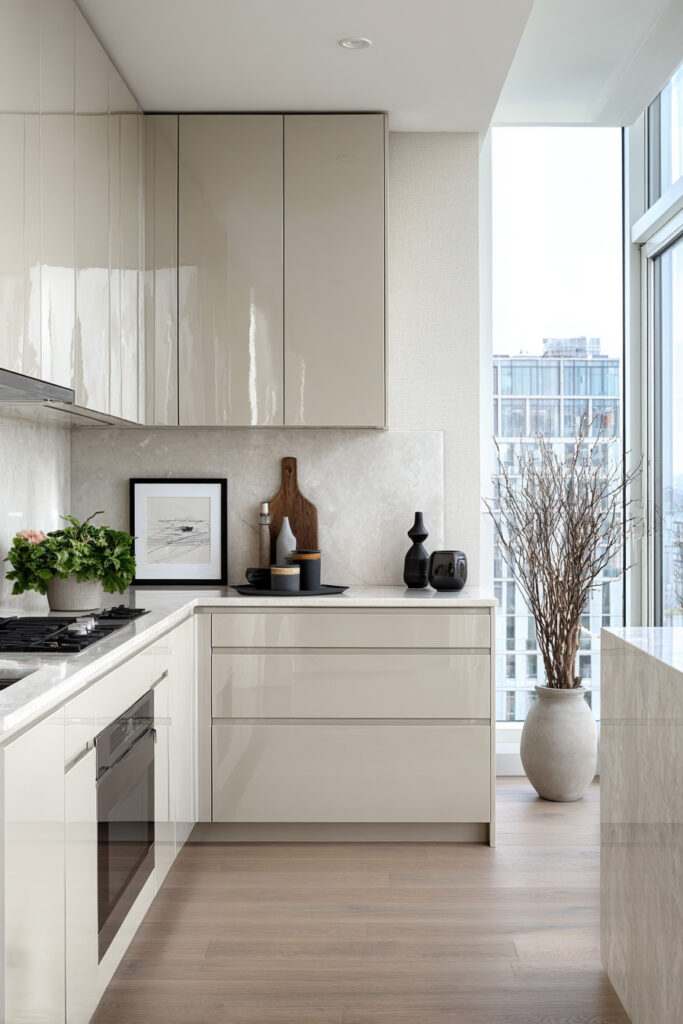
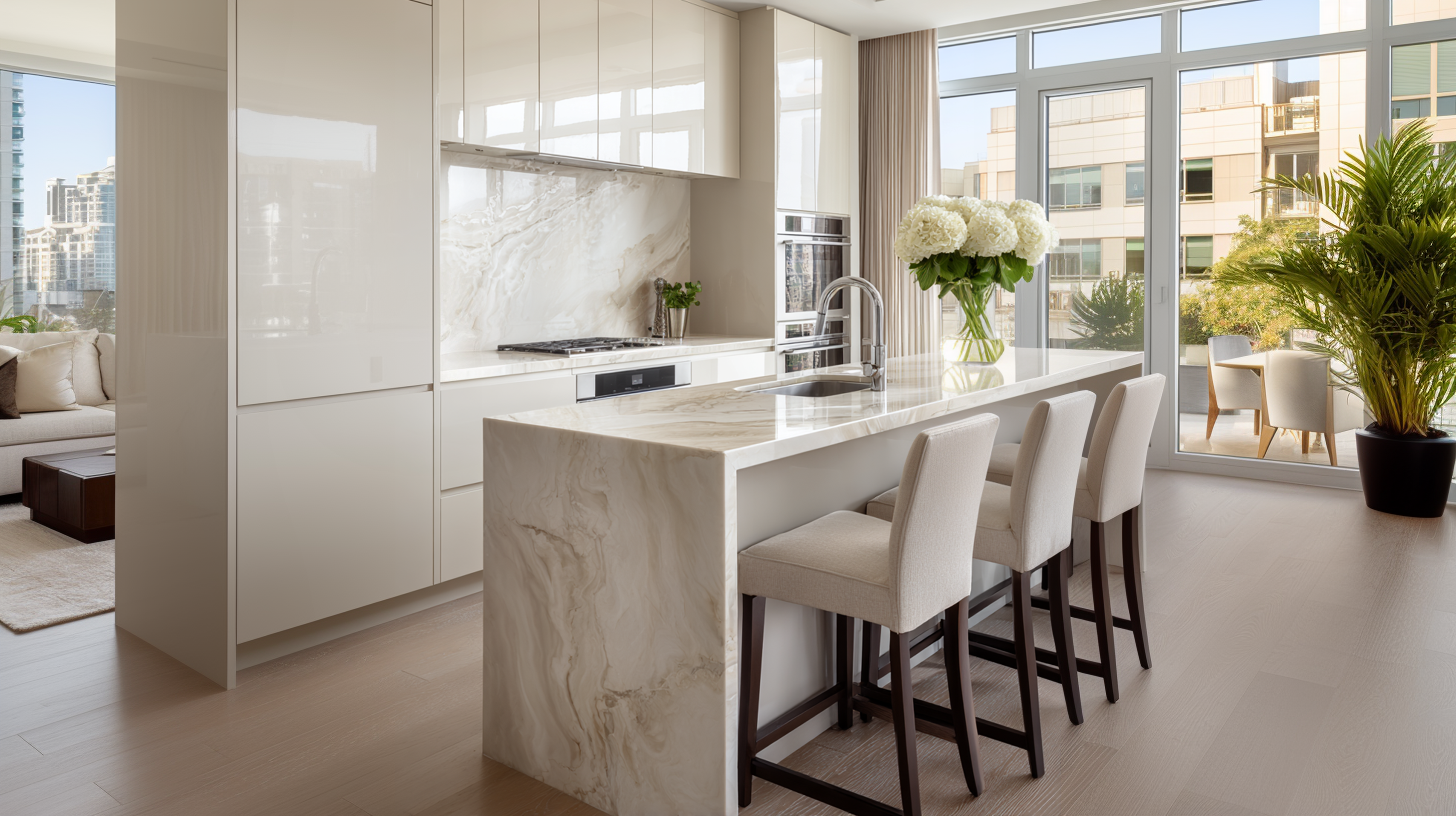
This kitchen shows how smooth, glossy cabinetry creates a clean and modern foundation while allowing natural materials to add quiet depth. The soft stone backsplash and warm wood flooring keep the space from feeling cold, proving how subtle texture can balance sleek finishes. It’s a great example of how dimensional surfaces are slowly replacing overly perfect kitchens with spaces that feel warmer and more lived-in.
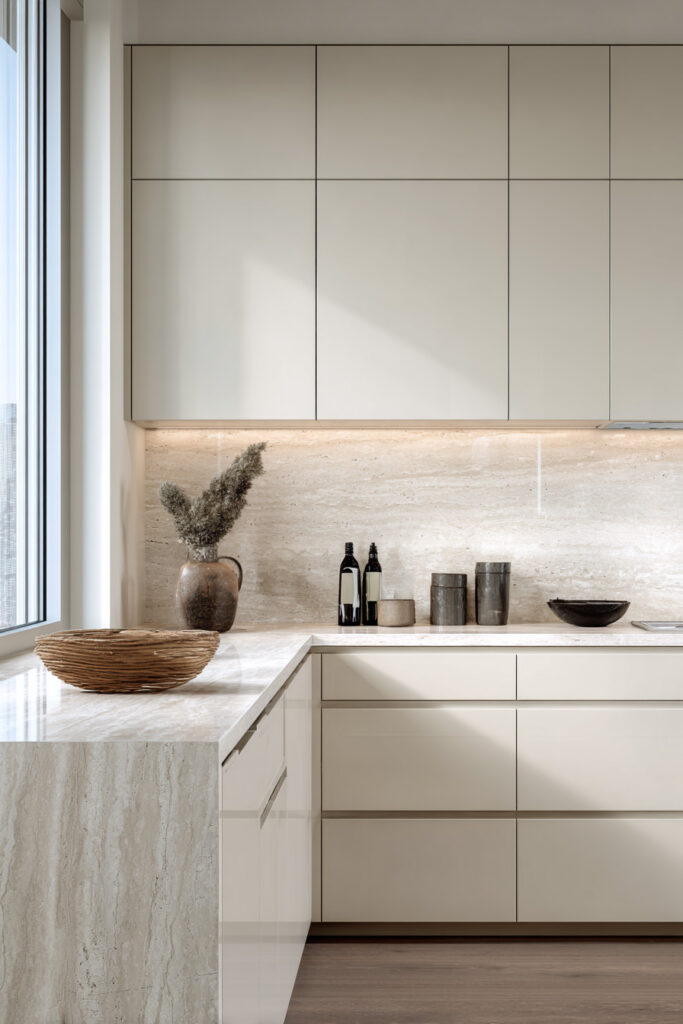
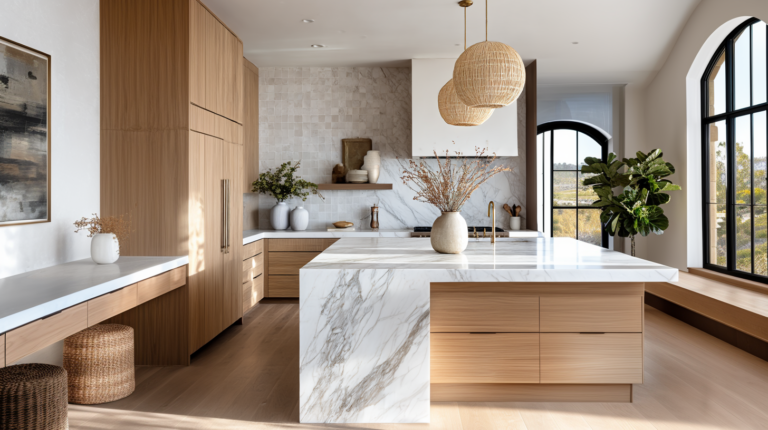
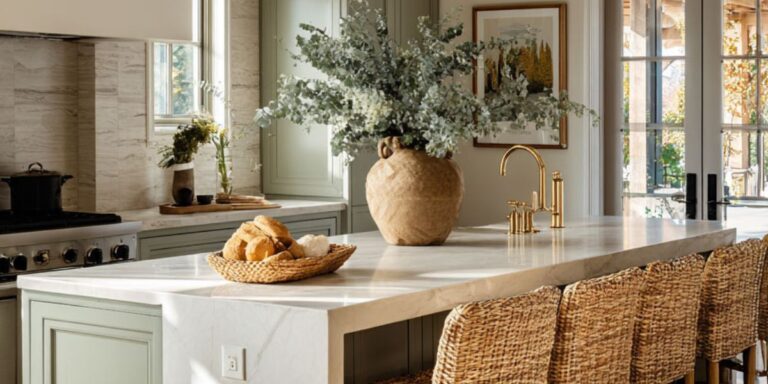
This kitchen shows how subtle dimensional surfaces can completely change the feel of a neutral space. The natural stone backsplash and softly textured countertop add depth and warmth while the flat cabinetry keeps the overall look calm and modern. It’s a great example of how texture brings movement into kitchens without relying on bold color or heavy styling.
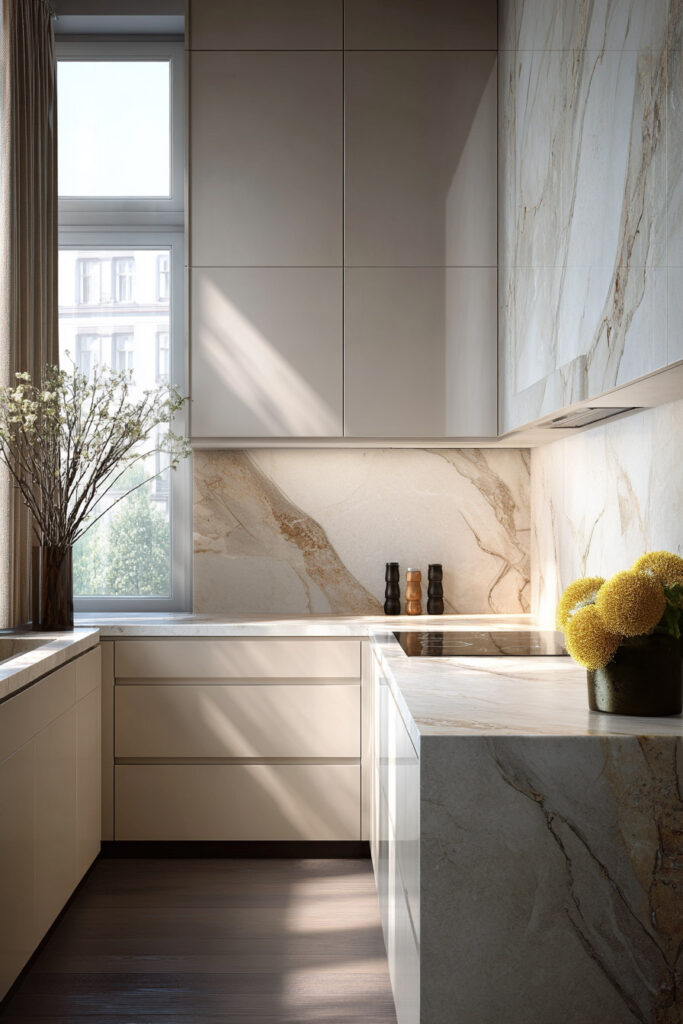
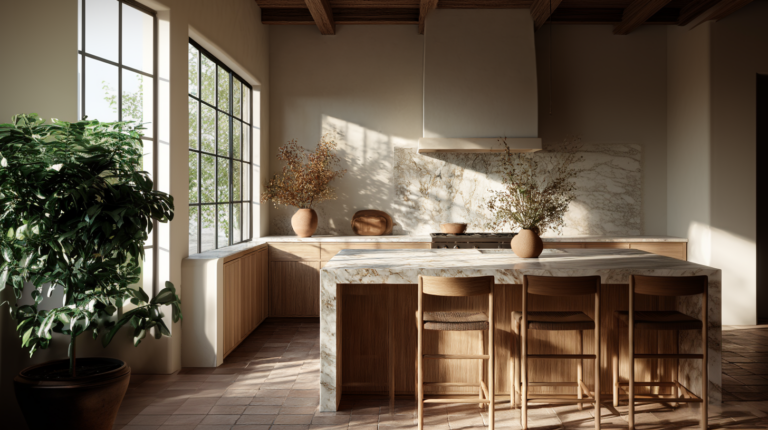
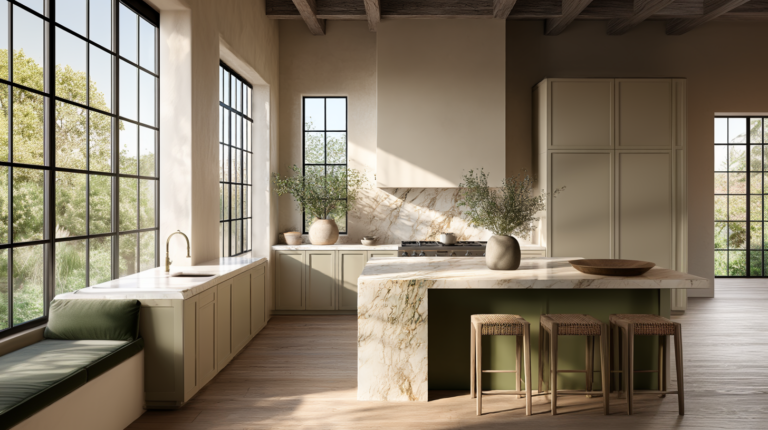
This kitchen highlights how natural stone instantly adds dimension to a neutral space. The flowing veining across the backsplash and waterfall countertop creates movement and depth while the smooth cabinetry keeps the overall look calm and modern. It’s a perfect example of how dimensional surfaces bring warmth and character into contemporary kitchen design without adding visual clutter.
The Dimensional Backsplash: Today’s Most Eye-Catching Kitchen Feature
Backsplashes have quietly become one of the most impactful areas in kitchen design. A dimensional backsplash immediately draws the eye, even when the rest of the space stays neutral and understated.
Textured tile, carved stone, or sculpted ceramic adds depth where you don’t typically expect it. As natural light moves across raised surfaces, the kitchen feels more layered and alive without ever feeling busy.
It’s also one of the easiest ways to experiment with texture. Because the area is relatively small, a dimensional backsplash delivers a high-end look without requiring a full renovation.
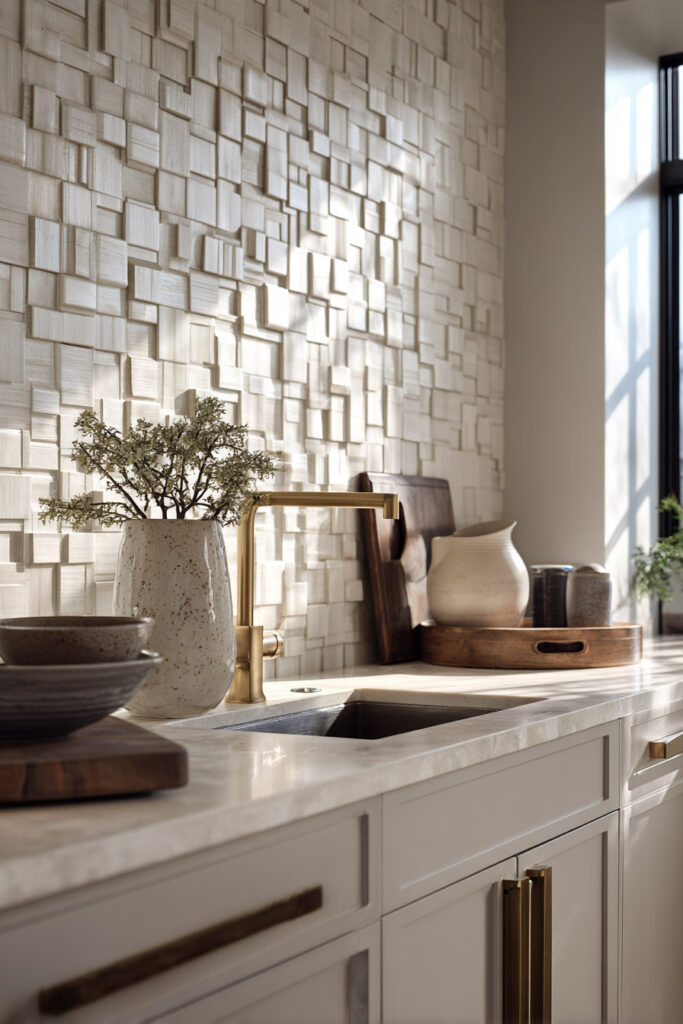
This dimensional backsplash shows how texture can become the main design feature in a kitchen without relying on color. The layered tile creates depth and shadow as light moves across the surface, giving the space a warm, architectural feel. Paired with neutral cabinetry and natural materials, it’s a great example of how textured kitchen surfaces add interest while keeping the overall design calm and timeless.
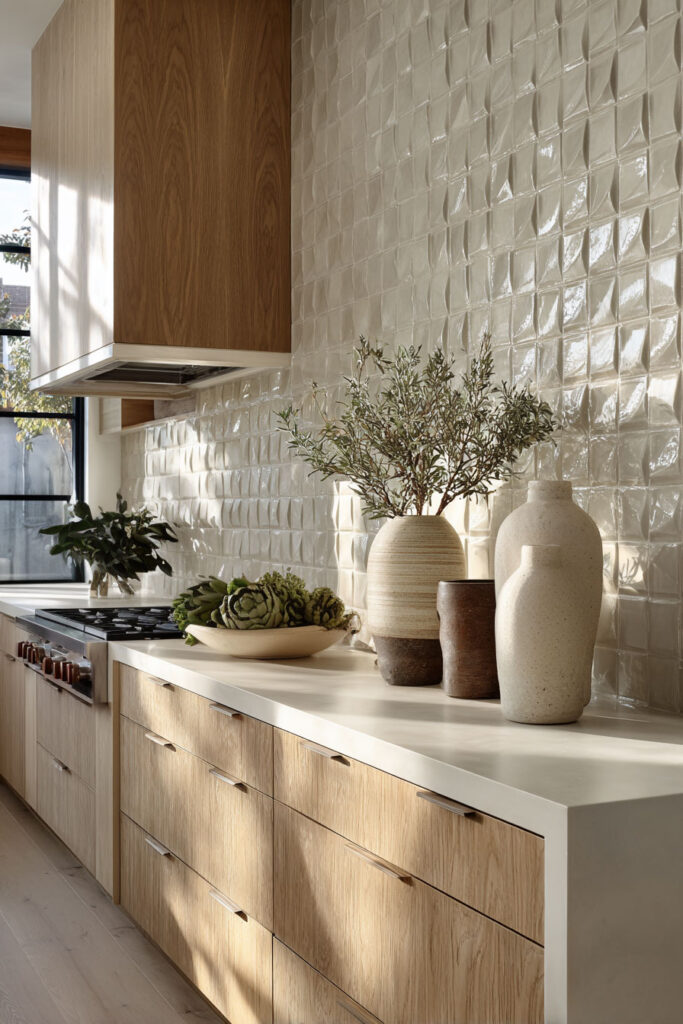
This kitchen shows how dimensional tile can completely transform a neutral space by adding movement and reflection. The glossy textured backsplash catches natural light throughout the day, creating depth without adding color or pattern. Paired with warm wood cabinetry, the layered surfaces feel modern, inviting, and effortlessly elevated.
Why Fluted and Ribbed Details Are Showing Up in Every Saved Kitchen
If there’s one texture trend showing up everywhere right now, it’s fluting and ribbing. These surfaces feel architectural yet soft, structured but still approachable.
Vertical lines add rhythm and visual height, while natural materials keep the overall look warm. Fluted stone backsplashes and ribbed tile designs photograph especially well in bright kitchens with neutral palettes, which explains why they perform so strongly on Pinterest.
They feel elevated without trying too hard—a balance that resonates with homeowners looking for kitchens that feel current but not overly trendy.
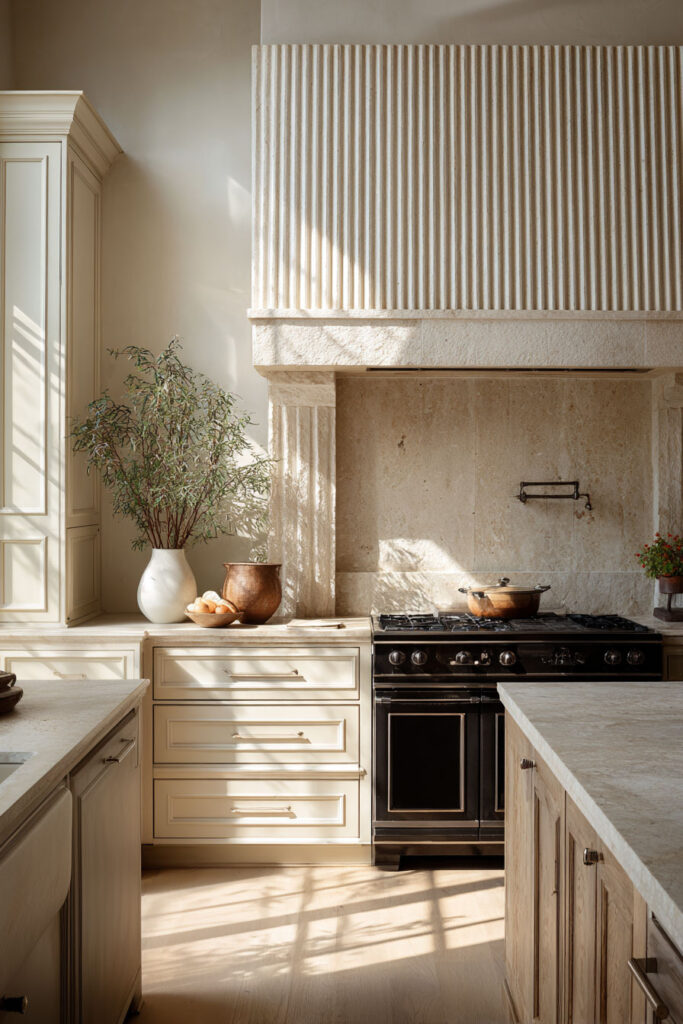
This kitchen shows how fluted stone adds architectural texture while still feeling soft and timeless. The vertical ribbed detail on the range hood creates movement and shadow, turning a functional element into a focal point. Paired with warm neutral cabinetry and natural materials, it’s a great example of how dimensional surfaces bring depth to classic and modern kitchens alike.
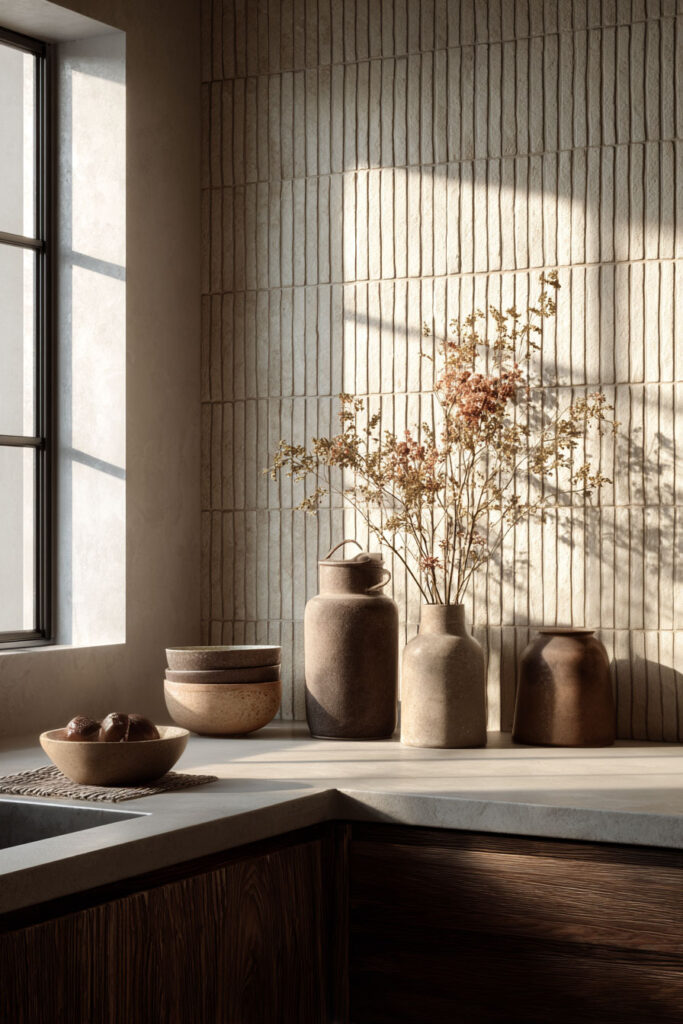
This kitchen shows how ribbed tile adds quiet dimension while keeping the overall space calm and natural. The vertical texture creates soft shadow and movement as light changes throughout the day, bringing warmth to the neutral palette. It’s a great example of how dimensional surfaces can make simple kitchens feel layered and thoughtfully designed.
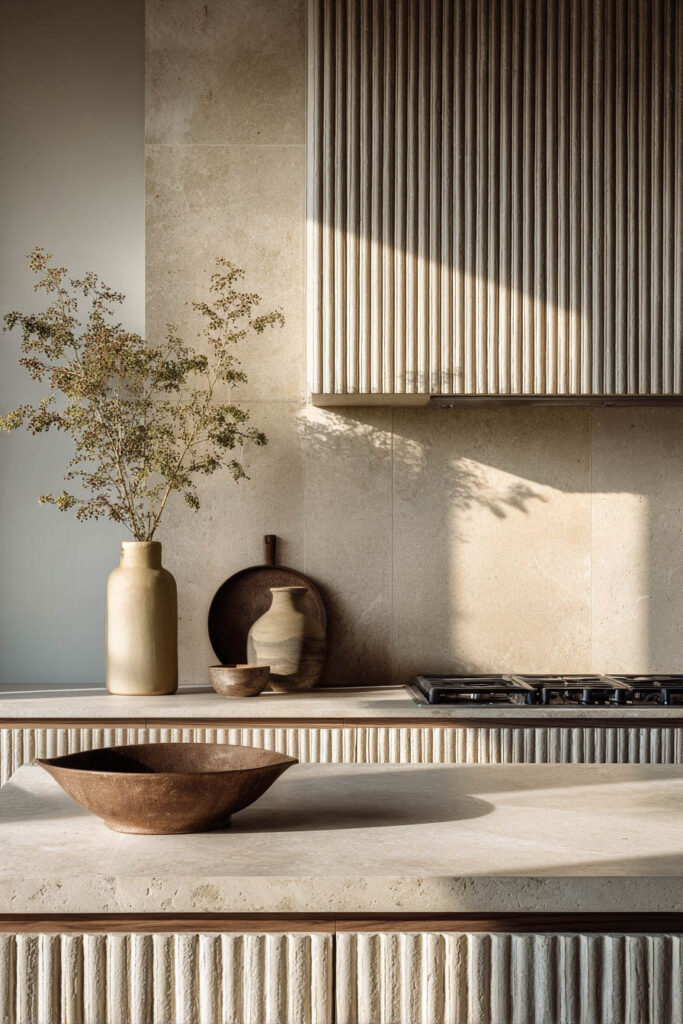
This kitchen shows how fluted cabinetry and ribbed detailing can add depth without introducing additional color or pattern. The vertical texture creates soft shadow and movement, giving the space an architectural feel while keeping the palette warm and minimal. It’s a strong example of how dimensional surfaces bring quiet luxury into modern kitchen design.
Combining Textured Surfaces for a Layered, Designer Look
One of the most sophisticated ways to use dimensional surfaces is by layering texture rather than introducing more color. Ribbed cabinetry paired with a textured backsplash creates depth while keeping the overall palette calm.
When tones stay consistent—soft beige, warm stone, muted gray, or creamy whites—the result feels cohesive and intentional. This layered approach is common in modern textured kitchen design, especially in spaces aiming for a custom, built-in feel without visual noise.
The room feels richer, even though the color story remains simple.
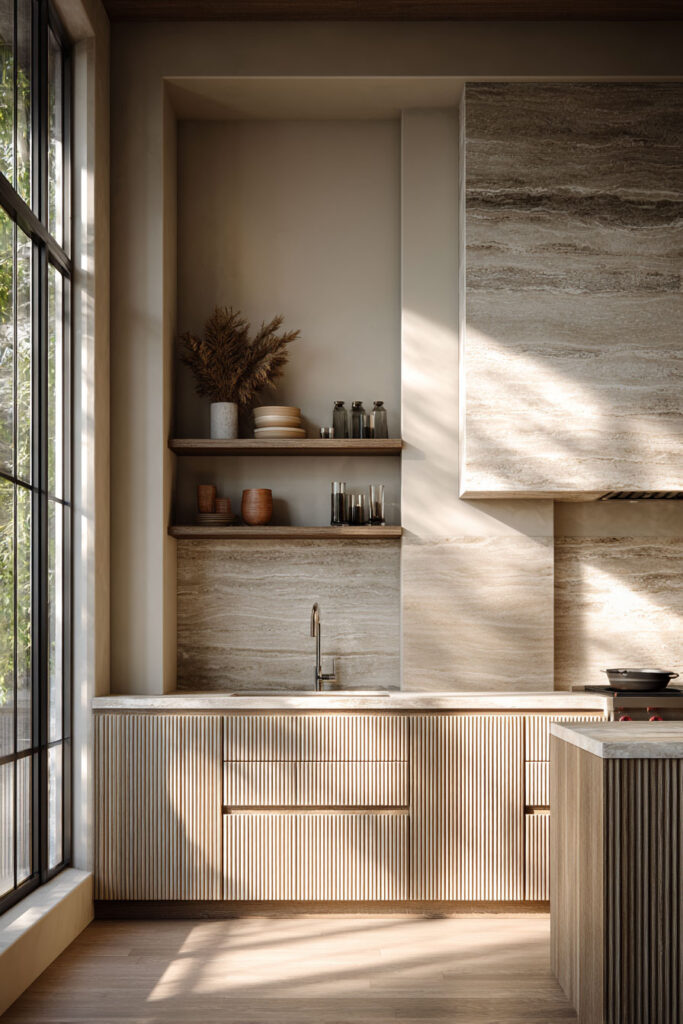
This kitchen shows how ribbed cabinetry and textured stone surfaces work together to create depth without adding visual clutter. The vertical lines bring rhythm and movement, while the natural stone keeps the space feeling warm and grounded. It’s a great example of how layered dimensional surfaces can make a kitchen feel custom and thoughtfully designed.
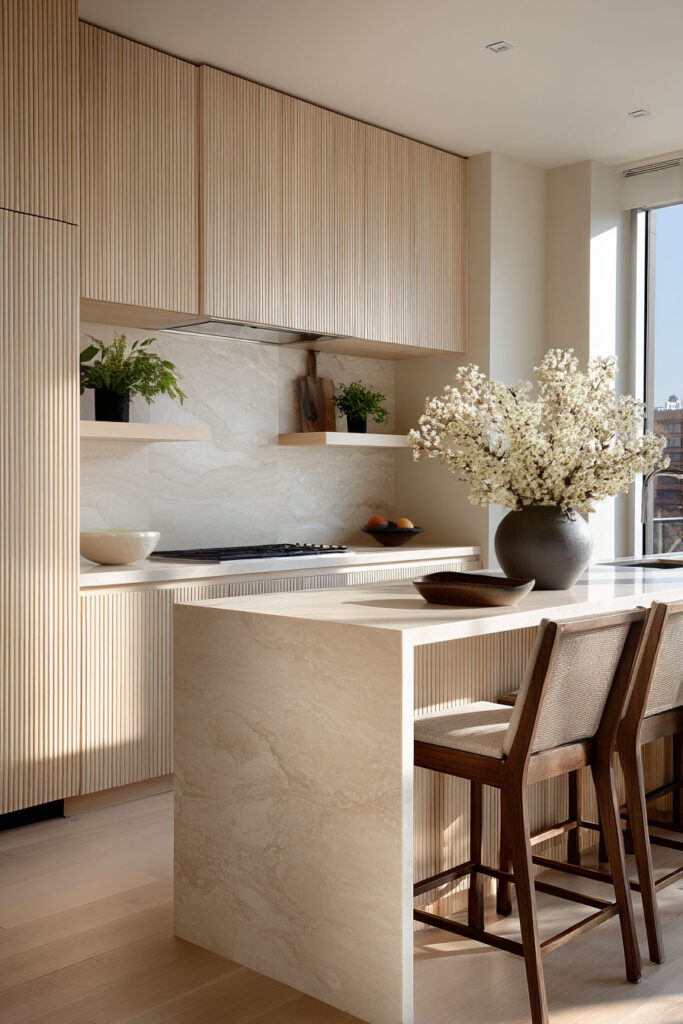
This kitchen shows how repeating texture across cabinetry and the island creates a cohesive, layered look. The fluted surfaces add depth and movement while the neutral stone keeps everything feeling calm and timeless. It’s a great example of how dimensional surfaces can make a modern kitchen feel warm, custom, and effortlessly elevated.
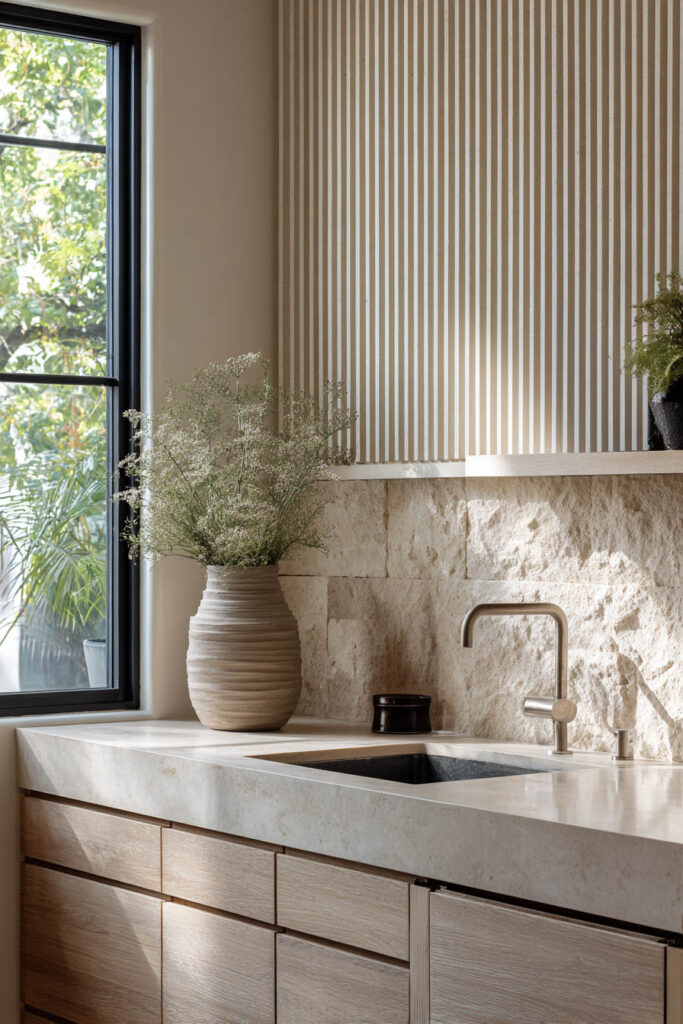
This kitchen highlights how combining fluted cabinetry with a textured stone backsplash creates natural depth without overwhelming the space. The vertical lines add rhythm while the rough stone surface introduces warmth and contrast, making the kitchen feel balanced and inviting. It’s a great example of how dimensional surfaces can work together to create a calm but visually rich kitchen design.
The Secret to Making Neutral Kitchens Feel Warm and Interesting
Not every dimensional surface needs to make a statement. Some of the most successful spaces rely on quiet texture instead of bold contrast.
Softly sculpted tile, lightly fluted stone, or plaster-style finishes add warmth without competing for attention. This approach works especially well in Scandinavian-inspired and minimalist kitchens, where calmness is part of the design goal.
Neutral kitchens don’t need dramatic color shifts to feel inviting. Thoughtful surface detail often does more to create comfort and depth than color ever could.
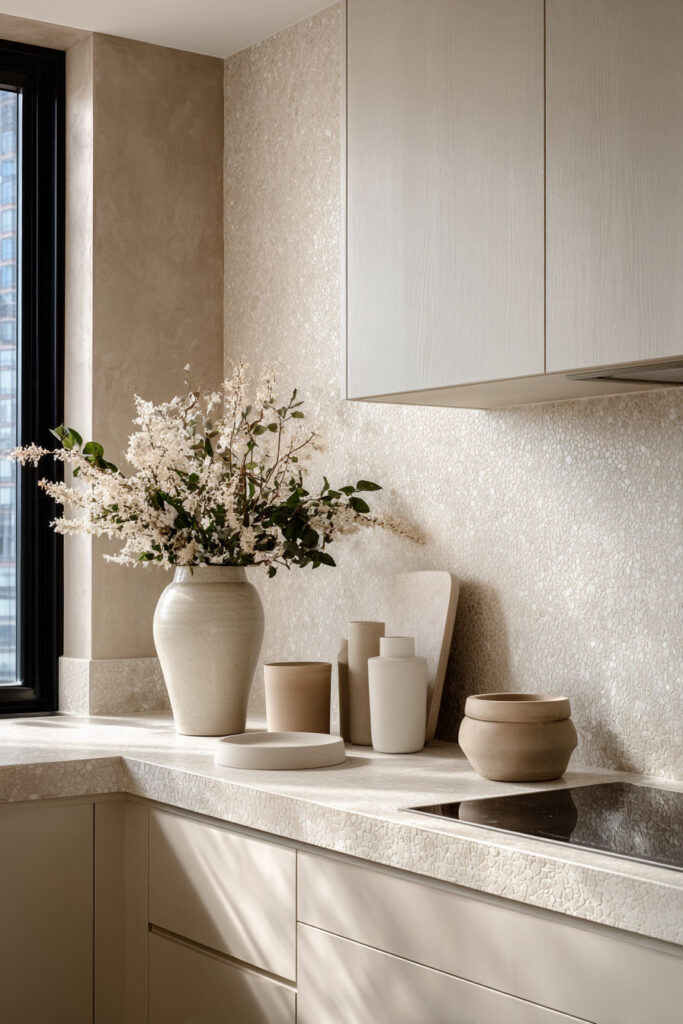
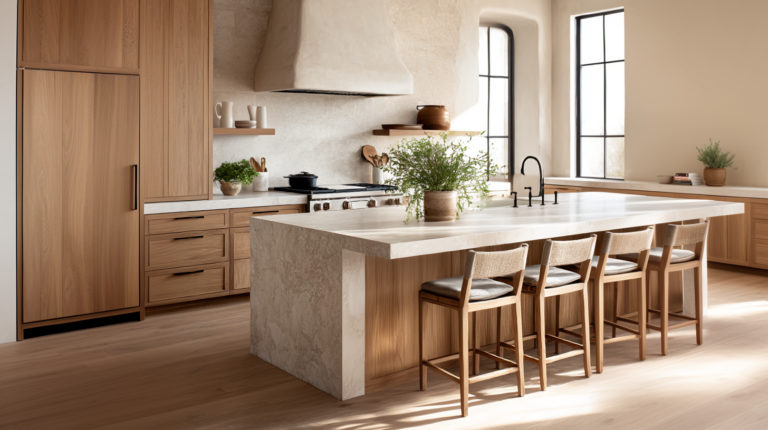
This kitchen shows how subtle texture can make a neutral space feel warm and layered without drawing too much attention. The softly textured backsplash and countertop add quiet depth while keeping the overall design calm and minimal. It’s a great example of how dimensional surfaces help neutral kitchens feel inviting rather than flat.
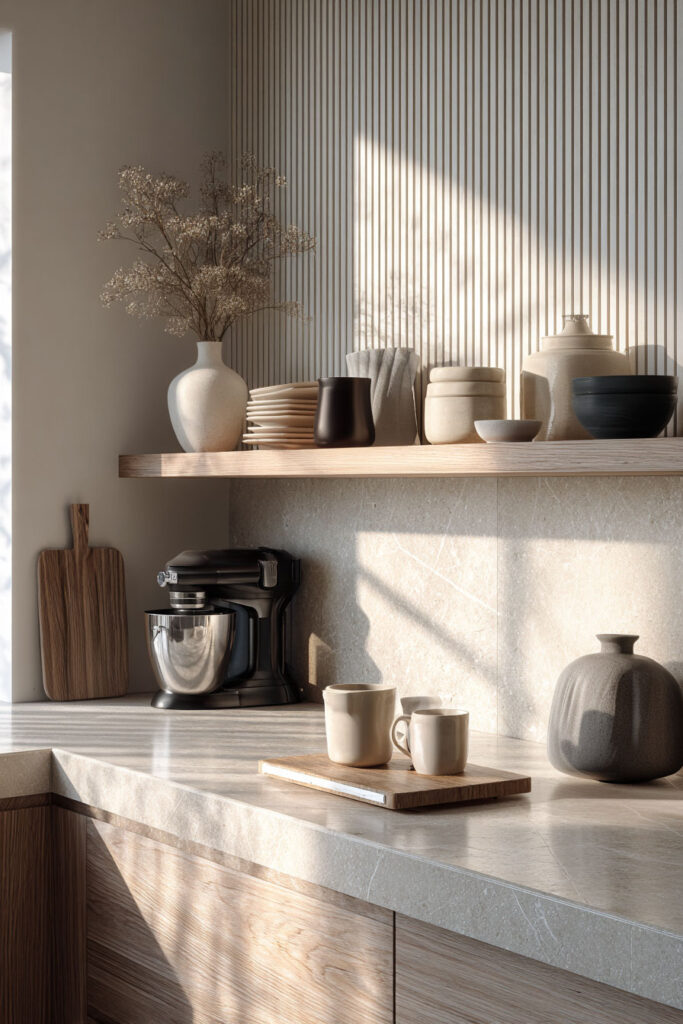
This kitchen shows how subtle fluted texture can quietly add depth while keeping a neutral space feeling calm and uncluttered. The vertical lines create gentle shadow and movement, adding interest without overpowering the natural materials. It’s a great example of how dimensional surfaces help neutral kitchens feel warm, layered, and thoughtfully styled.
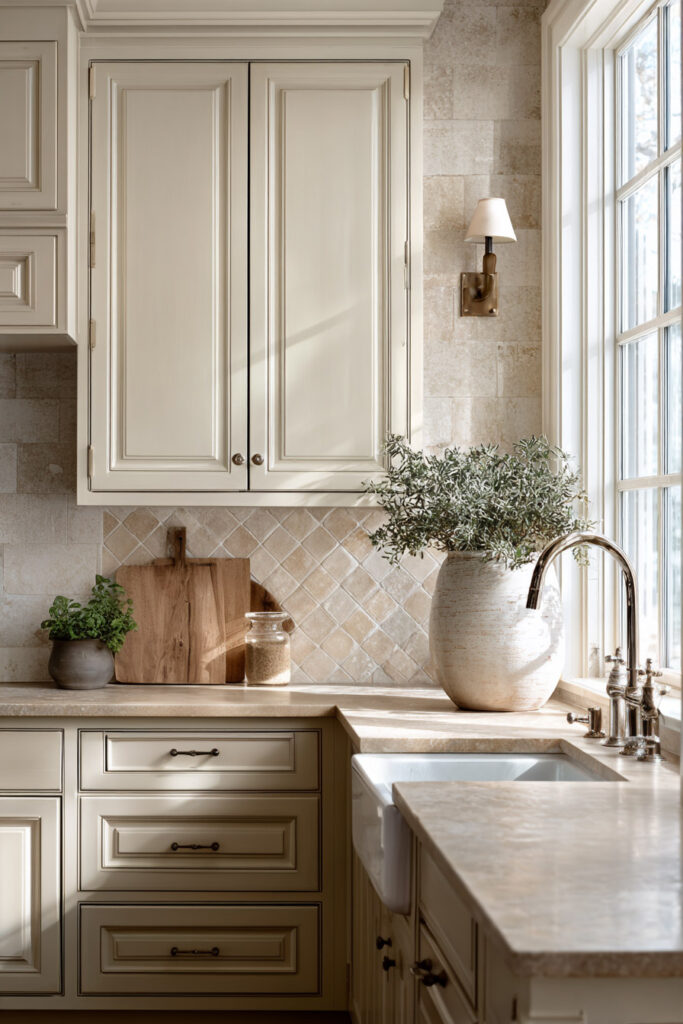
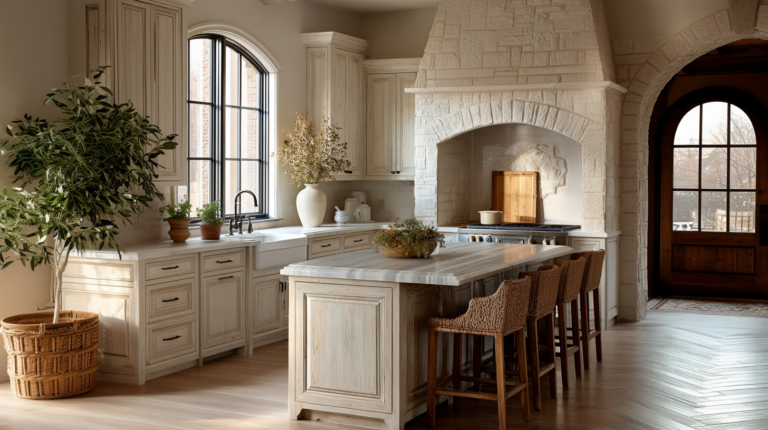
This kitchen shows how subtle texture can add depth while keeping a space timeless and understated. The softly patterned tile backsplash introduces gentle variation that complements the classic cabinetry and warm stone surfaces. It’s a great example of how dimensional surfaces can make neutral kitchens feel layered and inviting without changing the overall color palette.
Soft and Organic or Clean and Structured? Choosing Your Texture Style
Texture can completely change the mood of a space depending on how it’s used.
Organic textures—like handmade clay tile, limewash finishes, or natural stone—feel relaxed and imperfect. They bring softness and an earthy quality that makes a kitchen feel welcoming and lived-in.
Graphic textures, on the other hand, such as sharp fluting or precisely ribbed surfaces, feel more architectural and modern. They add structure and rhythm without overwhelming the design.
Neither approach is better; it simply depends on whether you want your space to lean warm and organic or clean and refined.
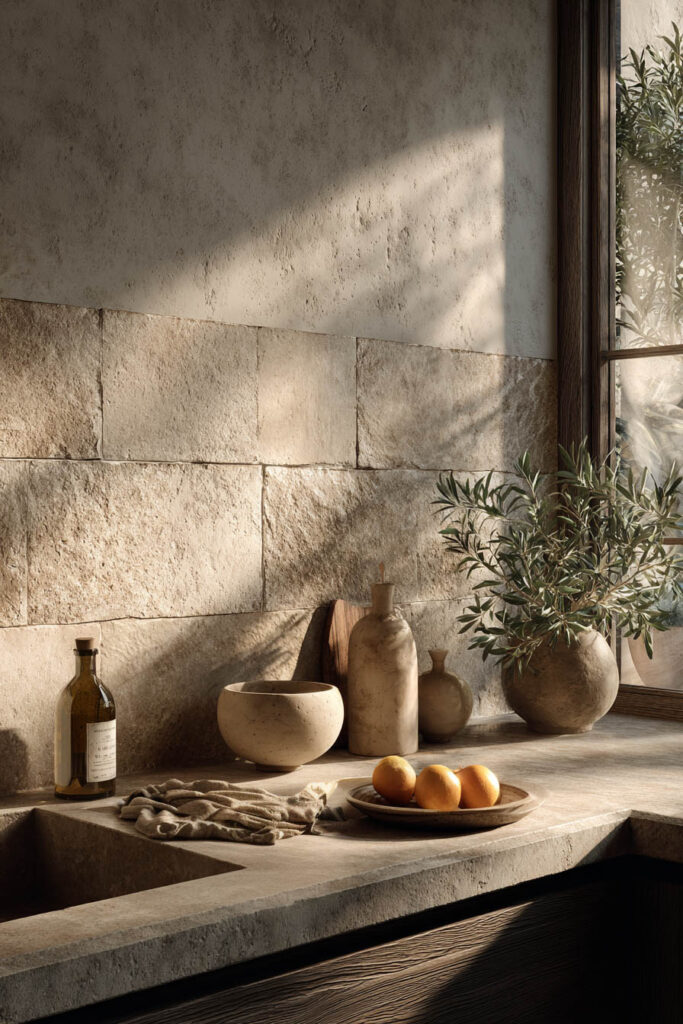
This kitchen highlights the beauty of organic texture through natural stone and softly imperfect surfaces. The rough stone backsplash and plaster-style wall create warmth and depth, giving the space a relaxed, lived-in feel. It’s a perfect example of how organic dimensional surfaces bring softness and character into modern kitchen design.
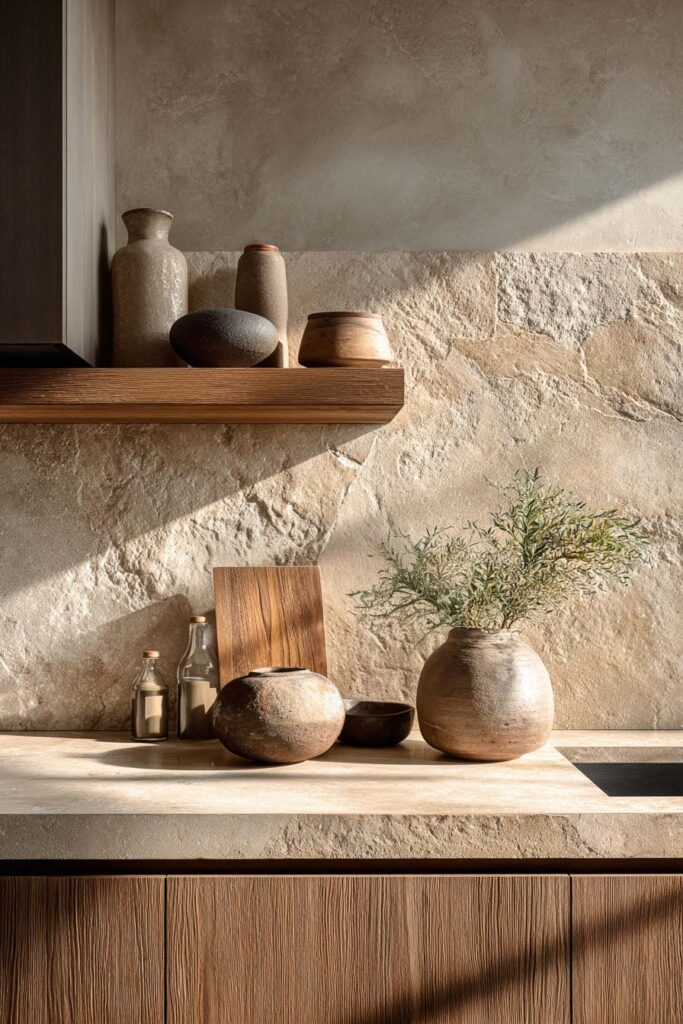
This kitchen highlights how organic texture creates warmth and depth through natural materials. The rough stone backsplash and warm wood cabinetry bring a relaxed, earthy feel that contrasts beautifully with clean modern lines. It’s a great example of how dimensional surfaces can make a kitchen feel grounded, timeless, and effortlessly inviting.
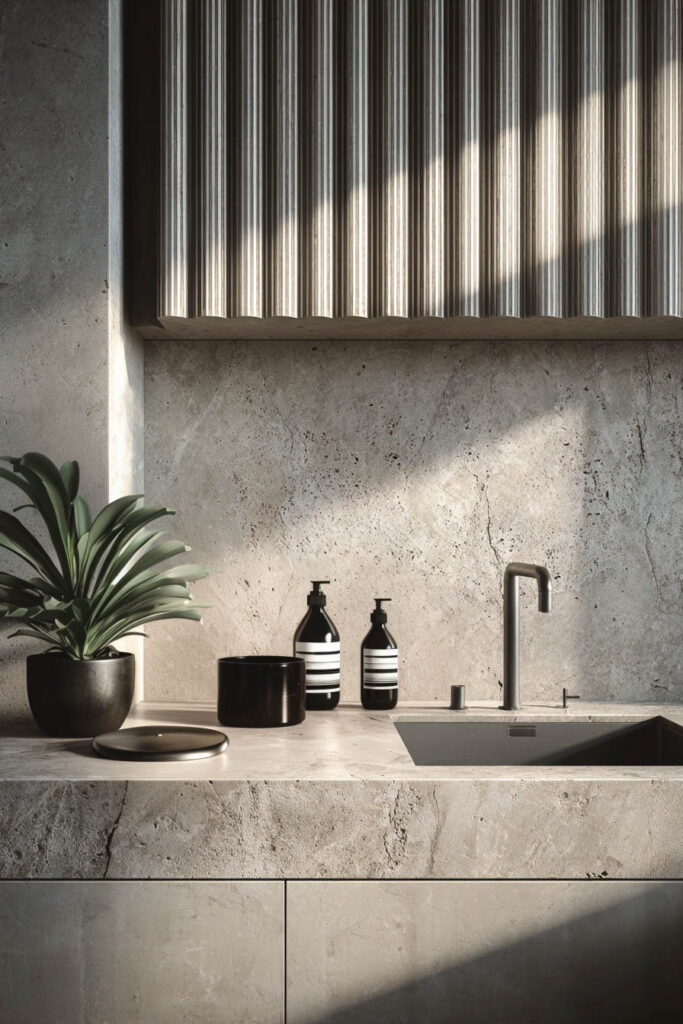
This kitchen shows how mixing organic stone with graphic ribbed cabinetry creates contrast while still feeling calm and cohesive. The textured backsplash adds depth, while the linear cabinet detail introduces structure and rhythm without overwhelming the space. It’s a great example of how dimensional surfaces trends are bringing balance and visual interest to modern neutral kitchens.
Materials That Naturally Work Best for Textured Backsplashes
Certain materials naturally lend themselves to dimensional design. Sculpted stone, ribbed ceramic tile, handcrafted clay, and plaster-inspired finishes are all leading choices for textured backsplashes.
What makes these materials stand out isn’t bold color—it’s variation in the surface itself. Raised details interact with light in a way flat finishes can’t, creating subtle depth that changes throughout the day.
That’s one reason dimensional backsplashes tend to age well. They rely on texture rather than trends.
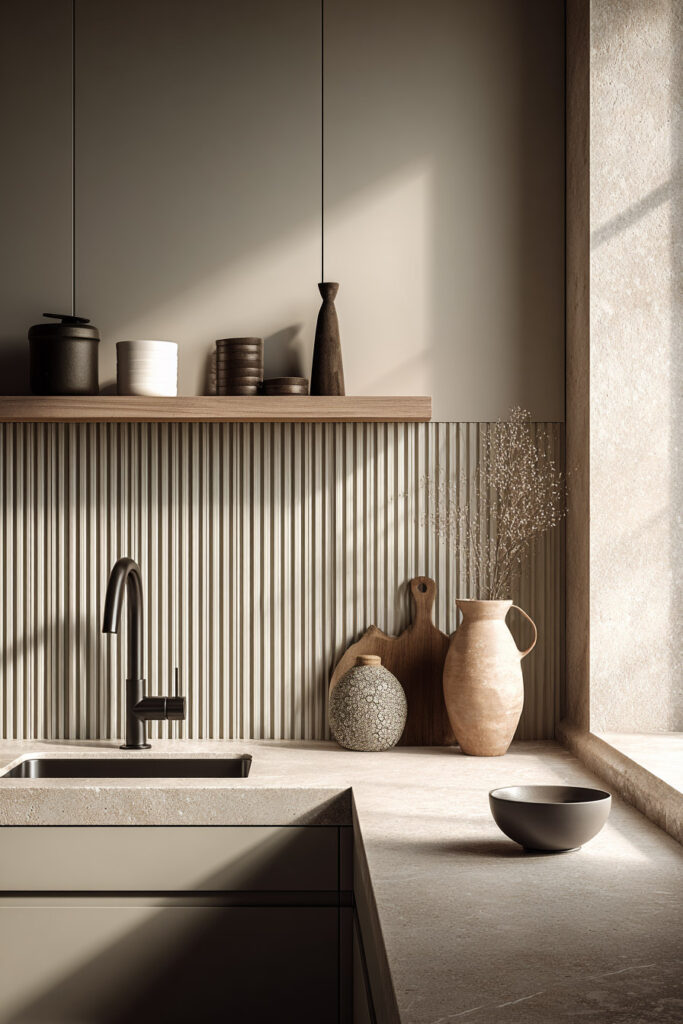
This kitchen highlights how ribbed backsplash panels add subtle movement and depth without overpowering a neutral palette. The combination of matte cabinetry, warm stone surfaces, and vertical texture creates a layered look that feels calm but visually interesting. It’s a strong example of how dimensional surfaces trends are shifting kitchens away from flat finishes toward more tactile design.
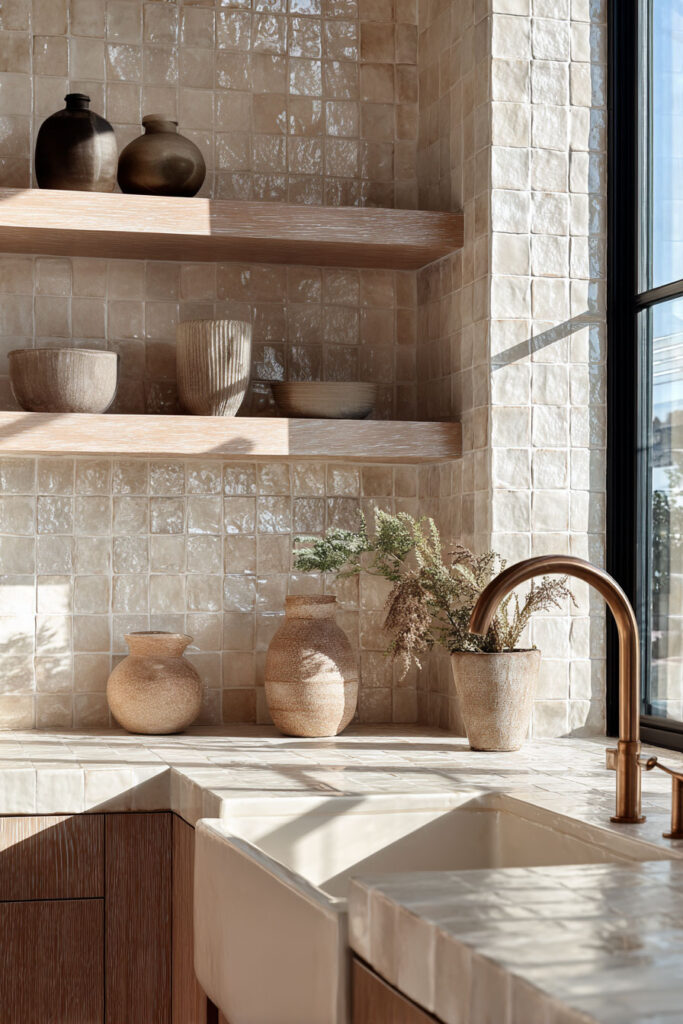
This kitchen shows how handmade-style tiles bring movement and softness to a neutral space through subtle variation and shine. The slightly uneven surface catches natural light throughout the day, adding depth without introducing bold color. It’s a great example of how dimensional backsplash materials can make a kitchen feel layered, warm, and visually interesting while staying timeless.
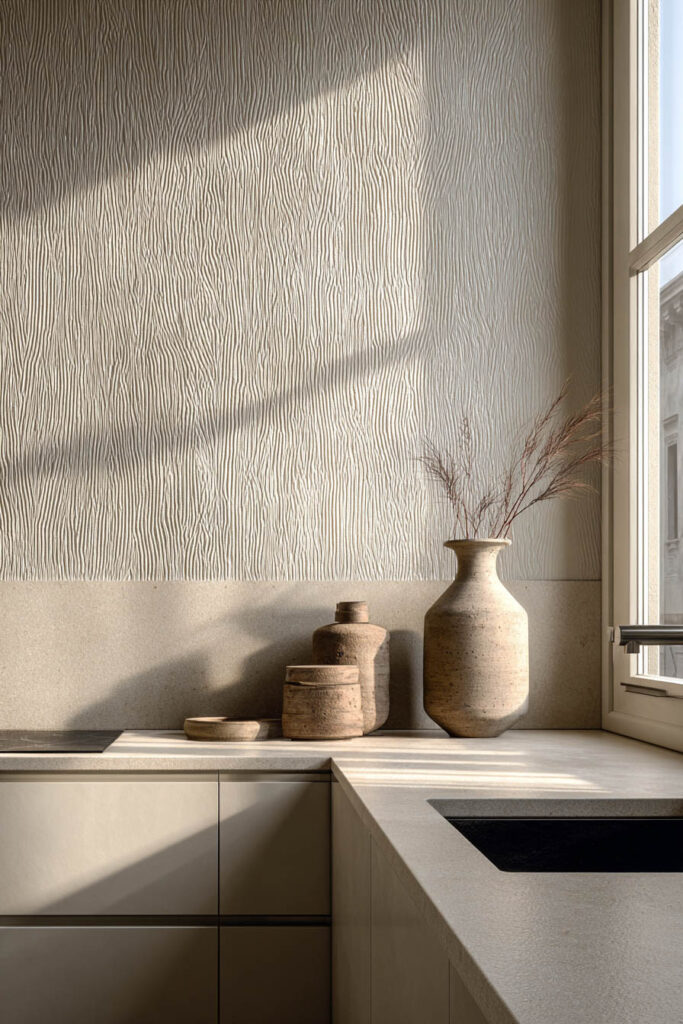
This kitchen shows how softly textured plaster can introduce dimension without relying on strong patterns or contrast. The organic surface catches natural light gently, adding movement and warmth while keeping the overall look calm and minimal. It’s a great example of how dimensional surfaces trends are moving toward tactile finishes that feel natural and timeless in neutral kitchens.
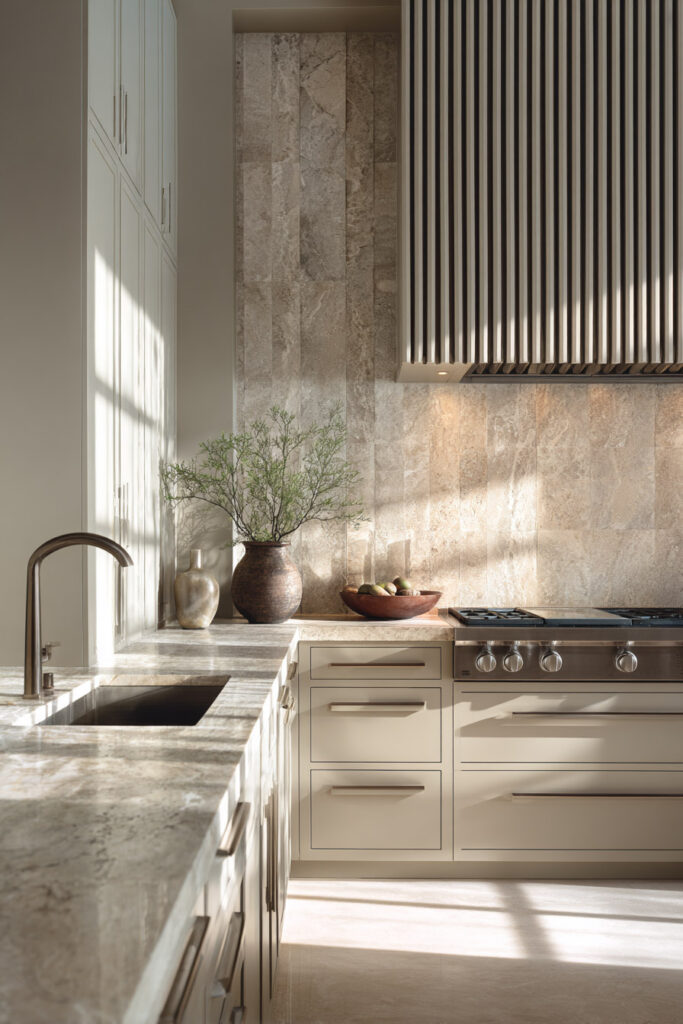
This kitchen shows how natural stone can bring quiet dimension into a neutral space without overwhelming the design. The variation in the stone adds depth and movement, while the ribbed range hood introduces a subtle layered texture that feels modern and warm. It’s a great example of how dimensional surfaces trends are shifting toward natural materials that create interest through texture rather than color.
How Texture Adds a More Custom, High-End Feel to Kitchens
Texture has long been associated with custom and architectural design, which is why dimensional surfaces often feel more elevated right away. They suggest craftsmanship and intention without needing extra ornamentation.
Even a small moment—like a fluted backsplash behind the range or a ribbed island panel—can make a kitchen feel thoughtfully designed. Paired with simple styling and natural materials, the overall effect feels quiet and refined rather than overdone.
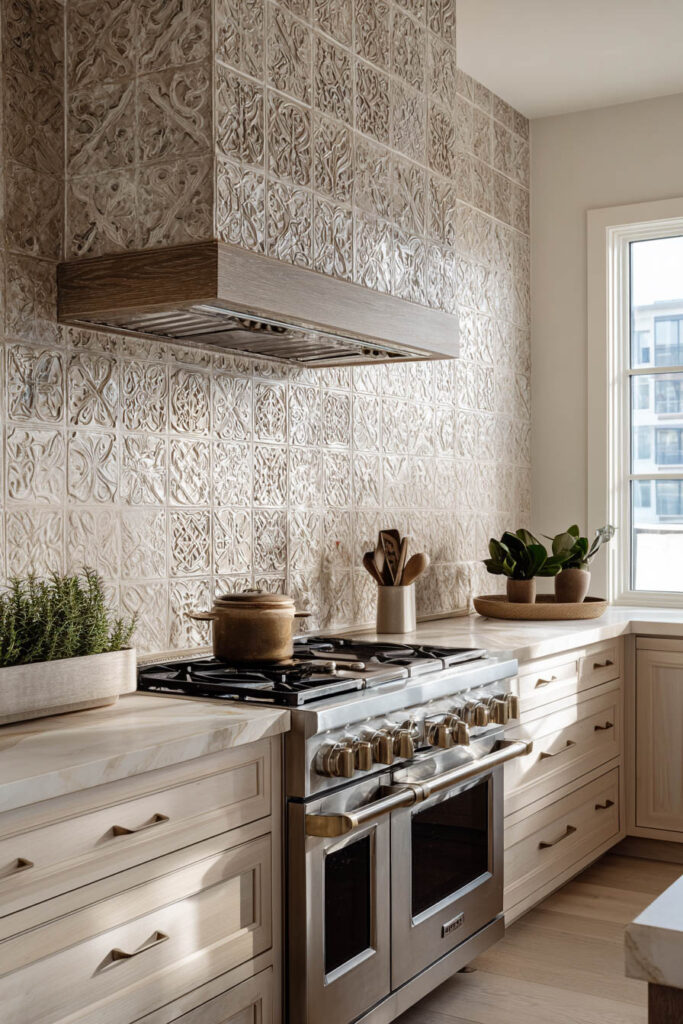
This kitchen shows how dimensional tile can instantly elevate a neutral space by adding depth and detail without introducing bold color. The carved tile backsplash creates movement and shadow throughout the day, giving the kitchen a more custom, high-end feel. It’s a great example of how dimensional surfaces trends are shifting toward texture-driven design that feels warm, layered, and timeless.
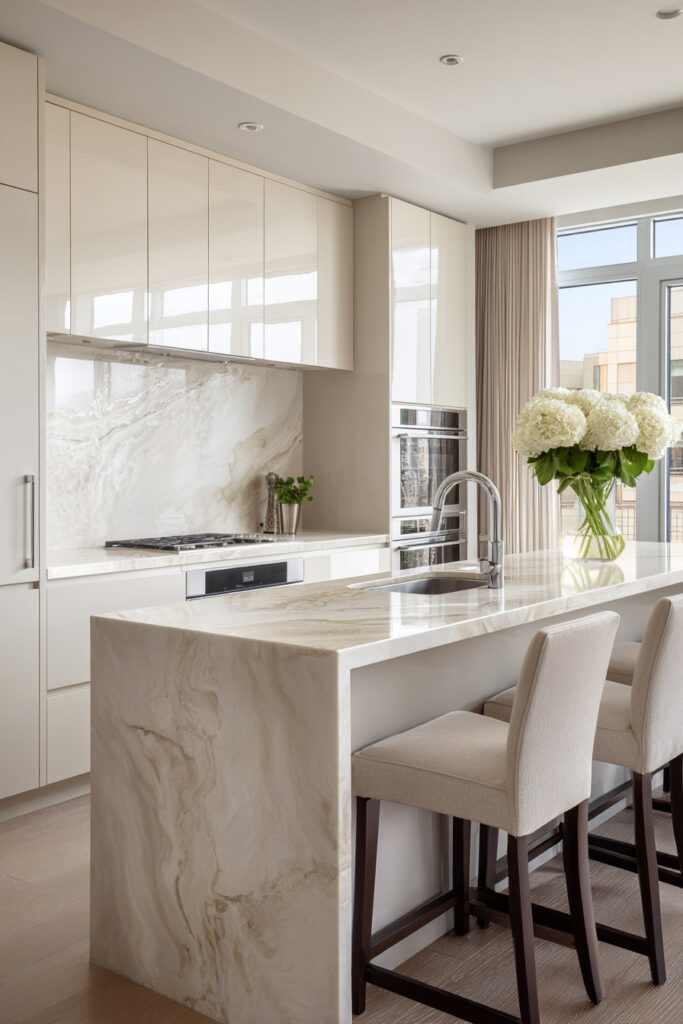
This kitchen highlights how large-format stone instantly adds depth and a high-end feel without relying on bold colors or busy patterns. The waterfall island and full-height stone backsplash create a seamless, dimensional look that feels calm, modern, and elevated. It’s a perfect example of how dimensional surfaces trends are shaping neutral kitchen design through natural movement and subtle texture.
Adding Dimension Without Making the Space Feel Busy
If you love the look but want to keep things balanced, start with a single focal point. A textured backsplash, fluted island detail, or sculpted accent wall can introduce dimension without overwhelming the room.
Keeping the color palette neutral allows texture to take center stage. This approach works equally well for small updates or full kitchen renovations, making it an easy way to experiment with dimensional design while keeping the result timeless.
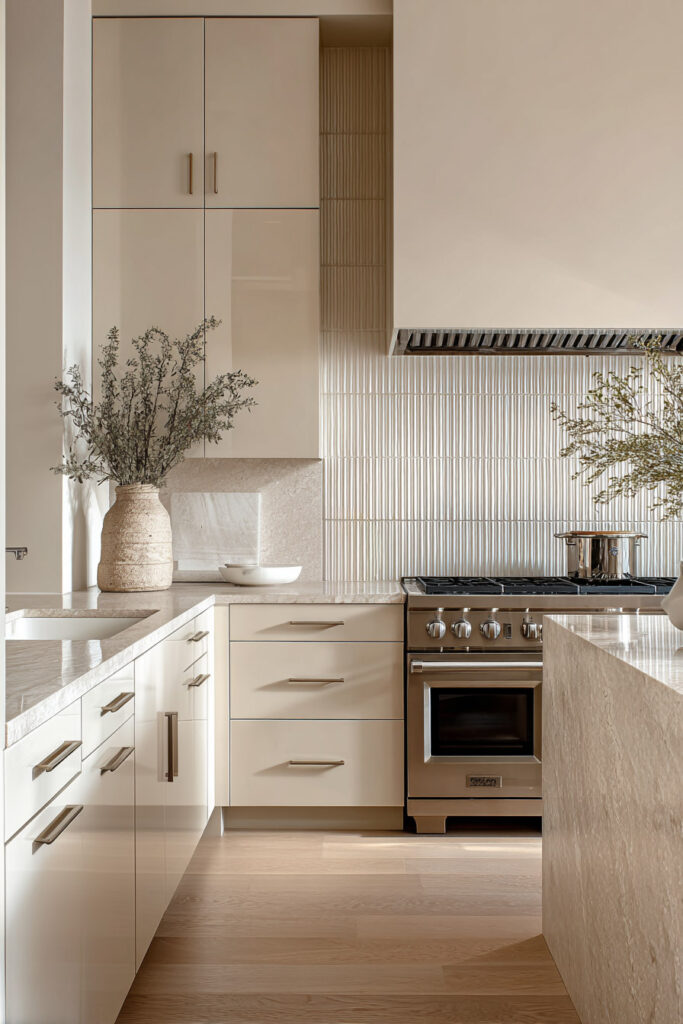
This kitchen shows how texture can be layered in a subtle way without overwhelming a neutral space. The ribbed backsplash adds quiet dimension and movement while keeping the overall look calm and cohesive. It’s a great example of how dimensional surfaces trends are shifting toward softer, more refined texture that feels modern but still timeless
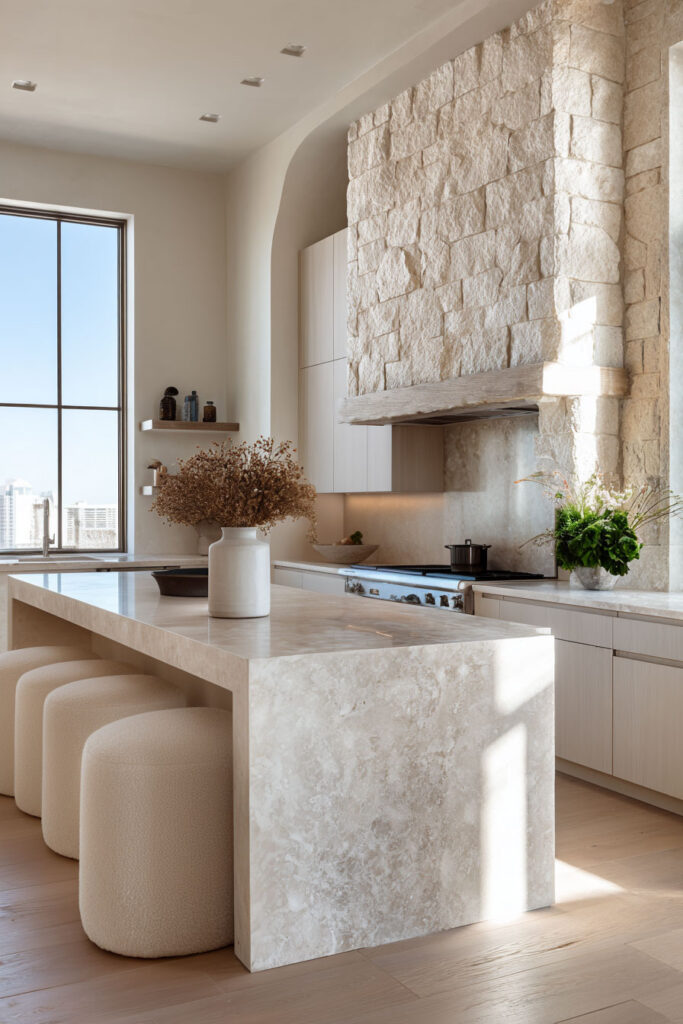
This kitchen shows how larger textured elements can add depth without making the space feel busy. The stone feature wall introduces natural dimension while the smooth island keeps the overall look balanced and calm. It’s a strong example of how dimensional surfaces trends use contrast between rough and refined finishes to create a high-end, layered kitchen design.
Why Texture Is Replacing Bold Color in Today’s Interiors
As bold color steps back, texture is stepping forward. Dimensional surfaces bring warmth, movement, and personality into interiors while still maintaining a calm, livable feel.
From fluted stone to ribbed tile and sculpted backsplashes, this shift shows how powerful subtle detail can be. The most compelling kitchens today aren’t necessarily louder—they’re simply more layered.
If you’re looking for a kitchen update that feels fresh, elevated, and worth saving for later, texture is one of the easiest places to begin.
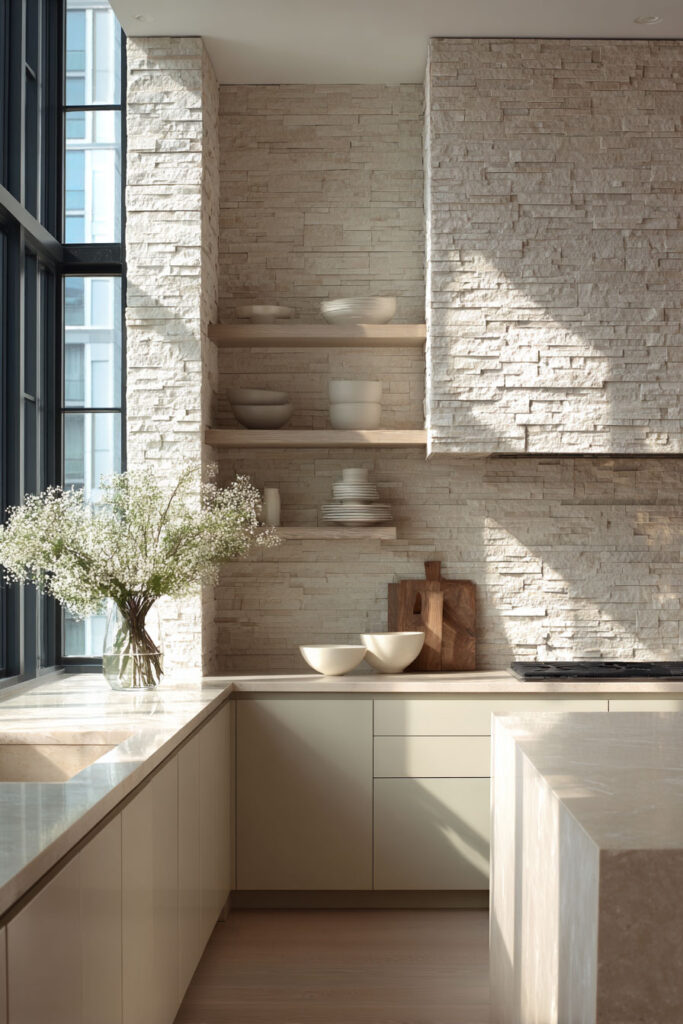
This kitchen shows how texture can take the place of bold color in modern design. The stacked stone backsplash adds depth and movement while keeping the palette soft and neutral, creating visual interest without overwhelming the space. It’s a great example of how dimensional surfaces trends bring warmth and character to minimalist kitchens through material instead of color.
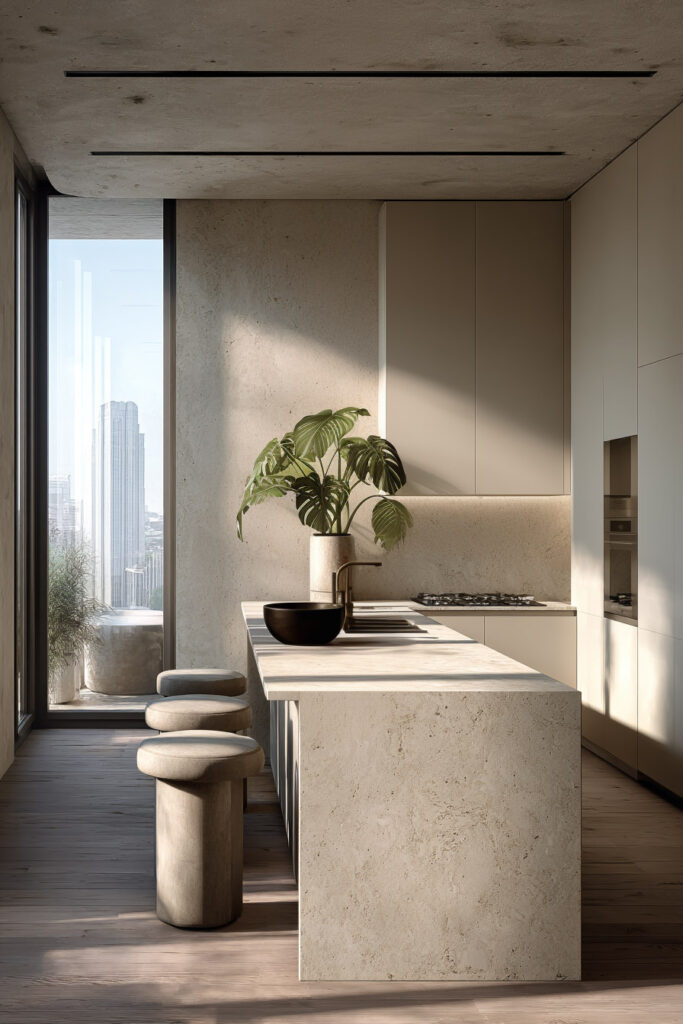
This kitchen shows how layered texture can completely shape a space without relying on bold color. The stone island, plaster-like walls, and soft neutral cabinetry create depth through materials, making the design feel calm but visually rich. It’s a great example of how dimensional surfaces trends bring warmth and interest to modern kitchens using subtle texture instead of contrast.
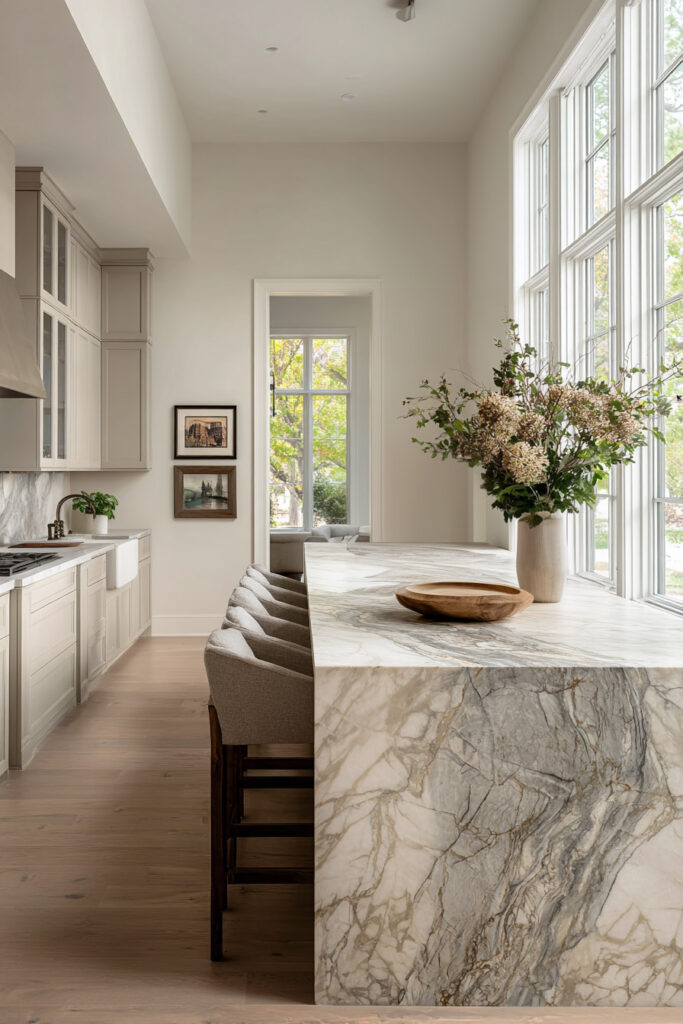
This space shows how texture can take the place of bold color in a kitchen design. The dramatic marble veining adds movement and depth, while soft cabinetry and natural light keep the overall look calm and timeless. It’s a great example of how dimensional surfaces make neutral kitchens feel elevated without adding visual clutter.